i.Live map
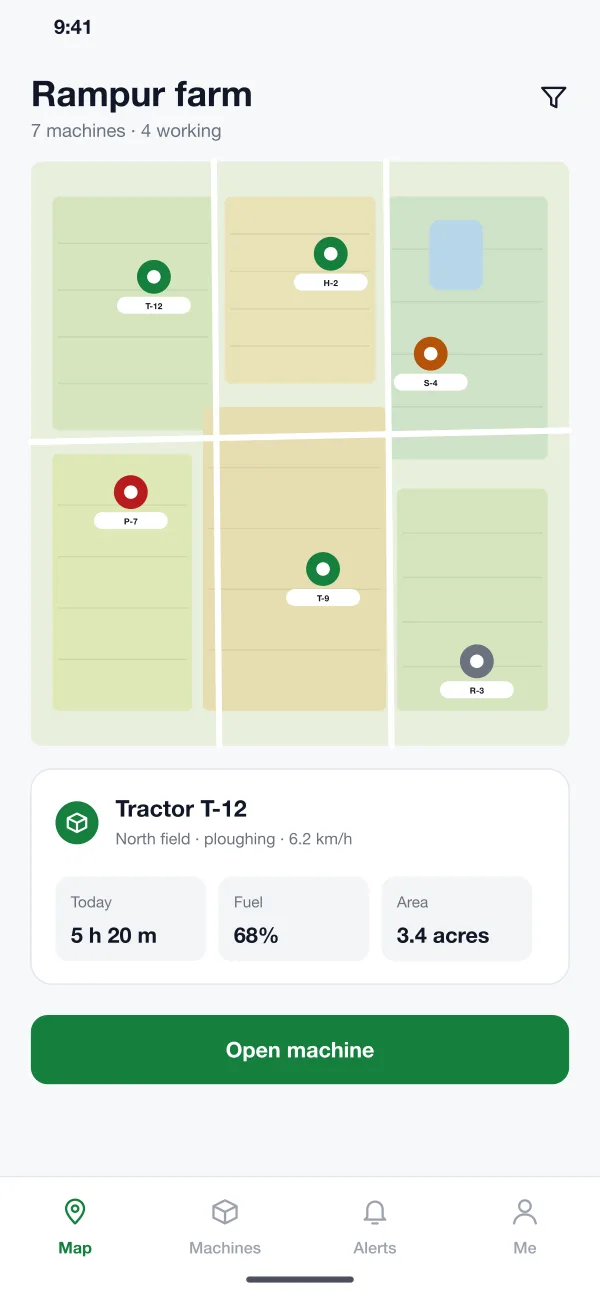
Fields are drawn on the map. Each machine is a pin with its name and a colour for working, idle, parked or alert. A tap opens a card with the hours worked, fuel and area covered today.
Farm fleet and equipment tracking
See where tractors and pumps are, how much fuel they use and when they need service. Alerts come from machine sensors.
No. 1
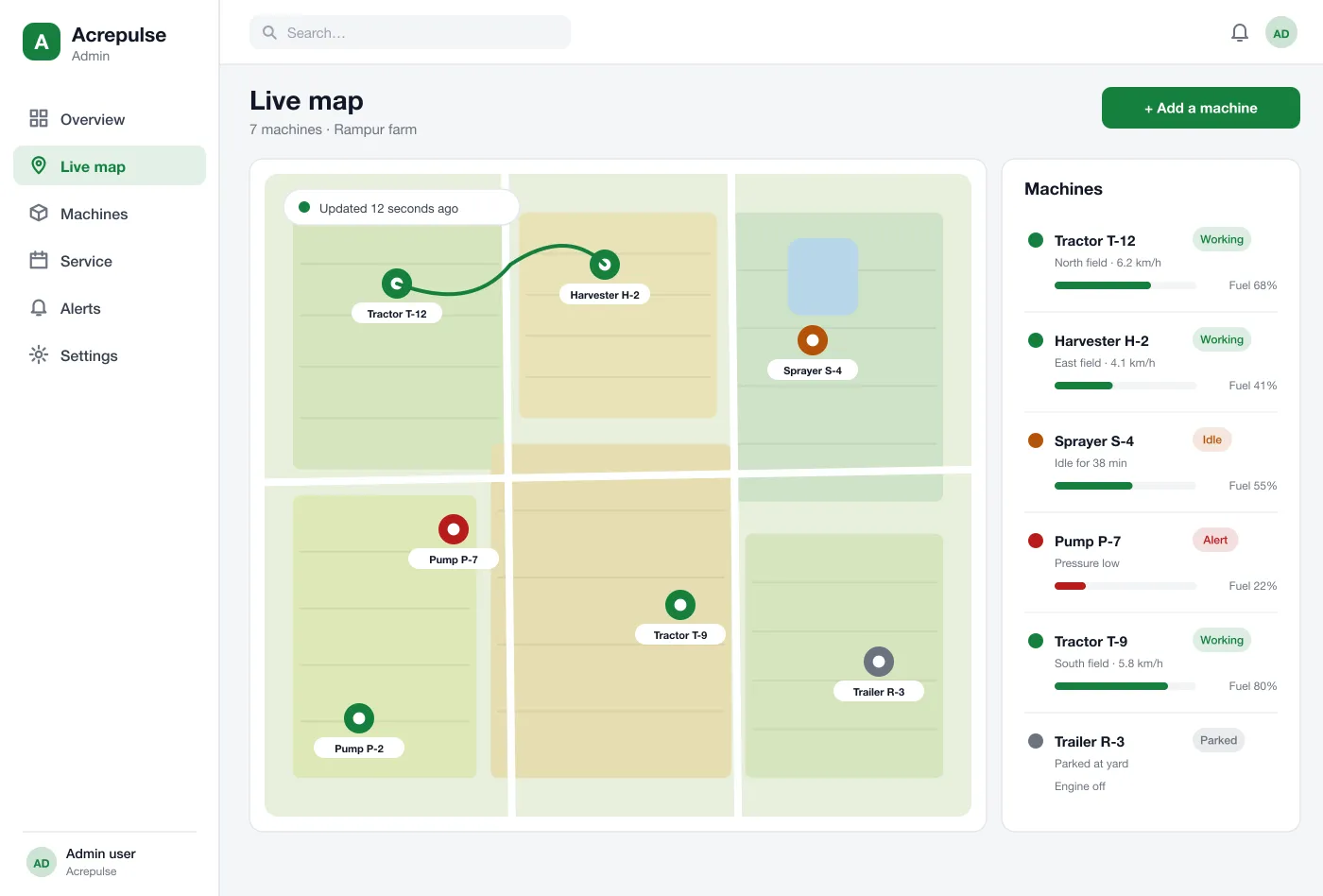
Each tractor and pump shows on a map as working, idle, parked or alert.
A planner marks each job as planned, due soon or overdue, by engine hours.
A weekly chart shows fuel used by each machine, so odd use stands out.
Plate I
Every tractor and pump, who is working, who is idle and who needs a look.
No. 2
Fields are drawn on the map. Each machine is a pin with its name and a colour for working, idle, parked or alert. A tap opens a card with the hours worked, fuel and area covered today.
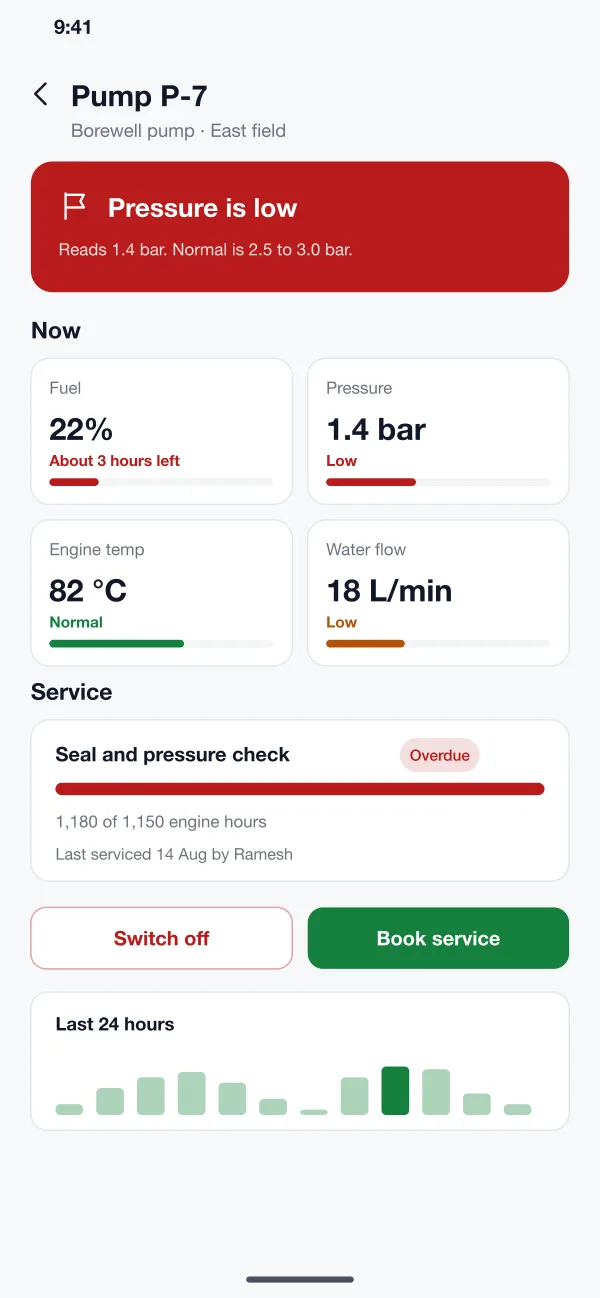
Each machine has its own page with fuel, engine temperature, pressure or water flow when a sensor is fitted, and a 24-hour chart of when it ran.
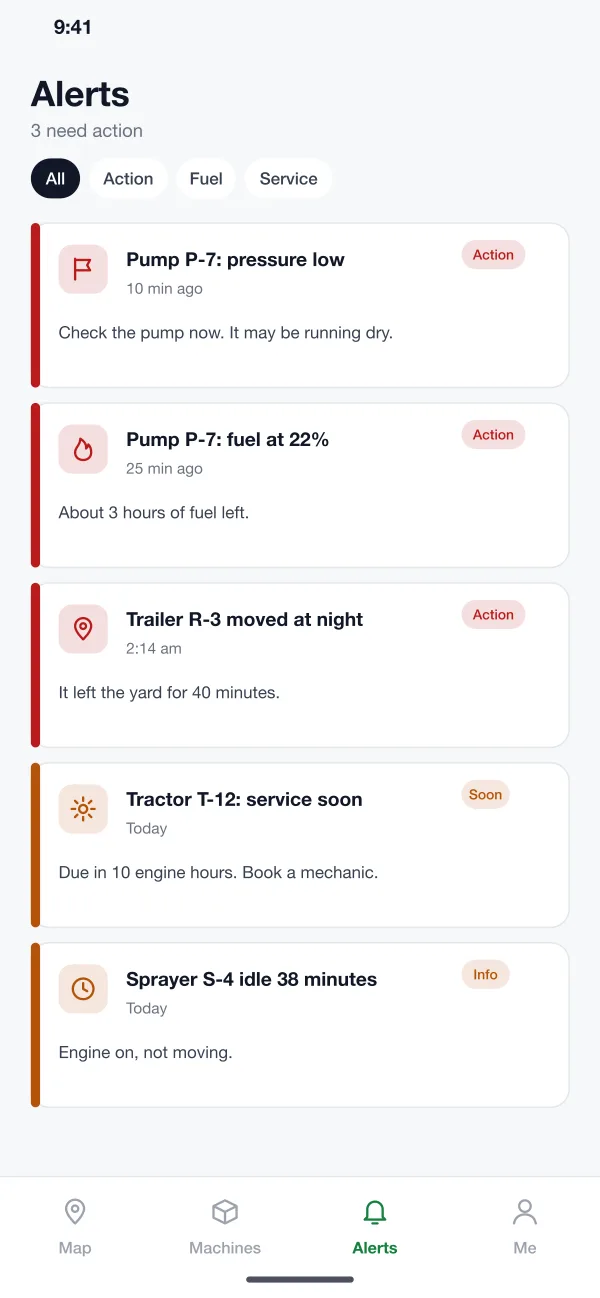
Alerts are sorted so that the ones needing action come first. Each one says what happened, when, and what to check, in plain words.
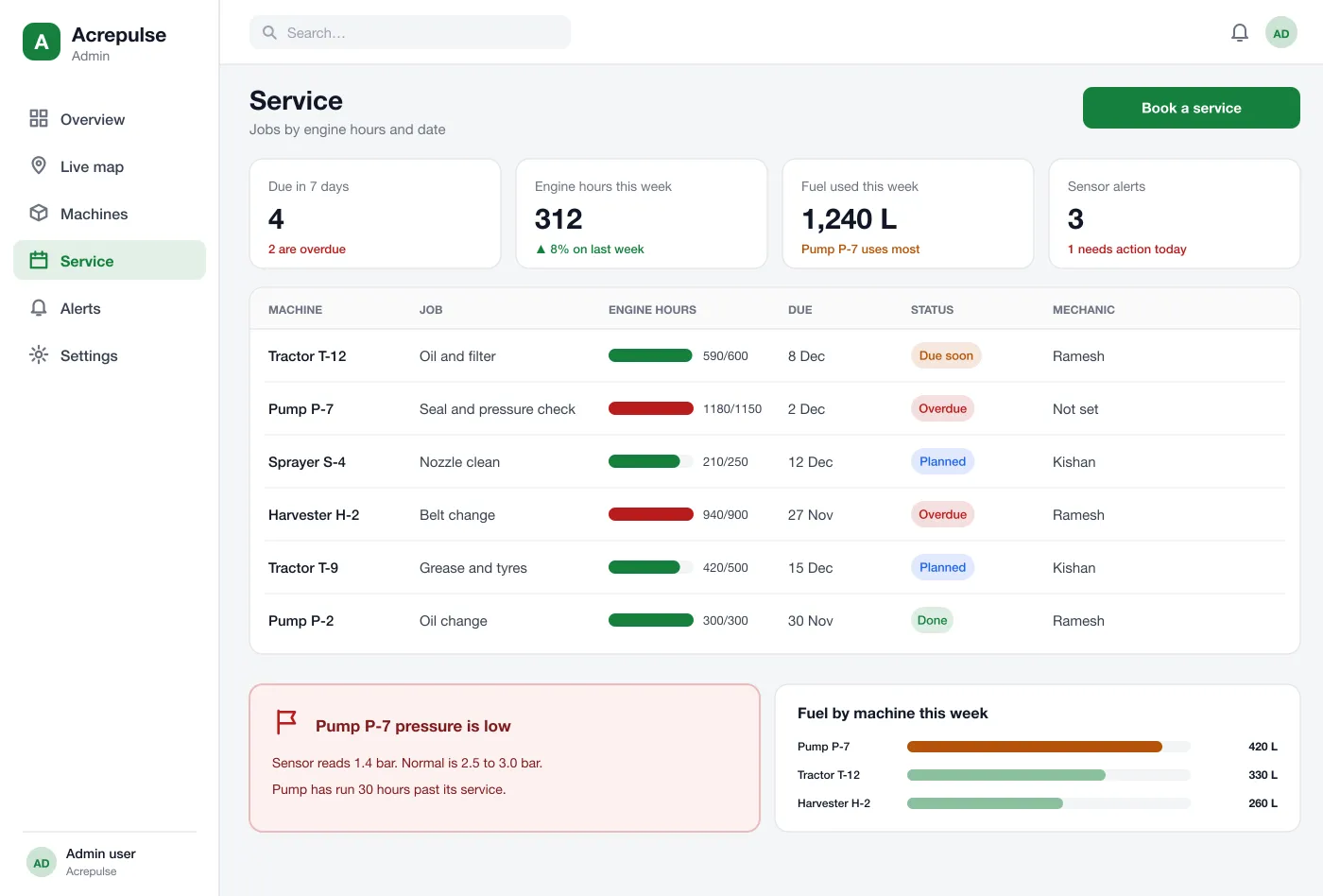
Each job has an engine-hours limit and a date. The planner shows a bar for each one and marks jobs as planned, due soon or overdue.
The board shows fuel used by machine each week. A machine that uses much more than the rest stands out and can be checked.
The farm draws a boundary around the yard and fields. A machine that leaves it at night raises an alert with its path.
Plates II and III
No. 3
Four everyday jobs for the owner, the office and the mechanic.
The owner opens the map at breakfast, sees four machines working and the sprayer idle for 38 minutes, and calls the driver.
A pump sensor shows low pressure. The alert reaches the owner, who switches the pump off from the app before it runs dry.
The office sees two jobs overdue, assigns Ramesh to both and books the dates from the planner.
At month end the owner reads the fuel chart, sees one pump using far more than the others and asks the mechanic to check for a leak.
Plate IV
What is due, the last job and the next date, so no machine is run past its service.
No. 4
Check the fields, the machines and the costs from one screen.
See the day's tasks and tell the office when a machine needs a check.
Get the service list and alerts, with the reason for each one in plain words.
No. 5
It is an app that shows where each tractor, harvester and pump is, how long it has run, how much fuel it has and when it needs service. It uses a small tracker or sensor fitted to each machine.
Each machine needs a GPS tracker, and most trackers can also read fuel and engine hours. Older machines and pumps can get simple add-on sensors. The app works with the tracker brands you choose, so the hardware can be picked by price and coverage.
Yes. We can build the mobile app and web board and connect them to the GPS trackers, fuel sensors and pump sensors you choose to use.
Each job has a limit in engine hours, a date, or both. The app counts the hours from the machine and shows a countdown, so a service is booked before it is overdue.
The app keeps the last known position and readings and sends them when the network returns. Alerts then arrive with the time the event really happened.