Shops and restaurant chains want to know how customers are really treated. A manager walking round on a good day does not show that. Many brands send in ordinary people to visit as customers and report back.
Running this by phone, WhatsApp and spreadsheets is slow. Shoppers lose the instructions, photos arrive in many chats, and nobody is sure the visit really happened. Payments are chased by hand.
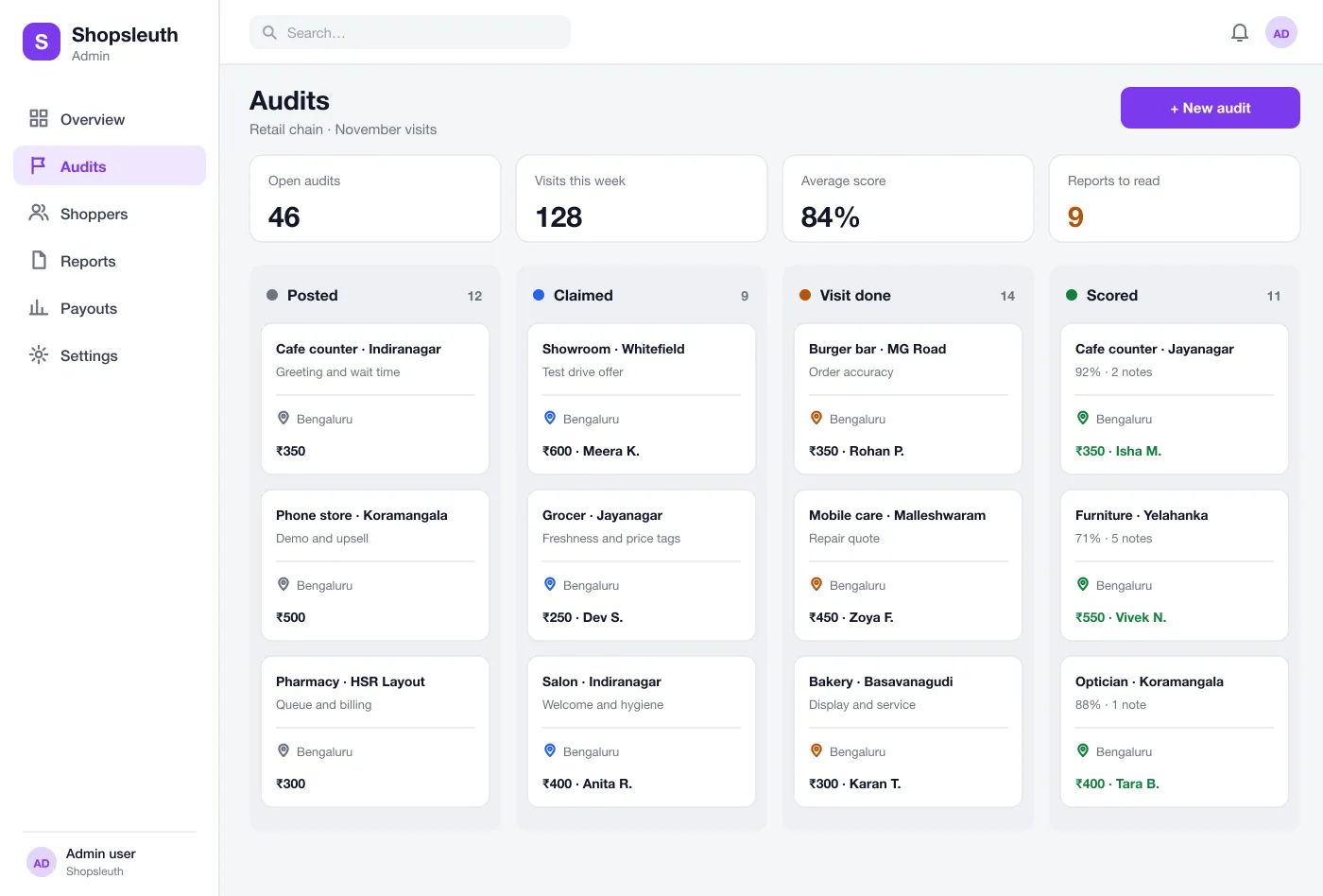
Audit board: every visit by stage, with the store, the shopper and the score
A brand posts the visit once. A shopper nearby claims it, answers the same questions as everyone else, and backs every answer with proof.
Features
Six parts of one audit
I.Post an audit
The brand picks a store, a date window and a questionnaire, and sets the pay for the visit. The audit then shows up for shoppers who live within a few kilometres.
II.Claim a visit
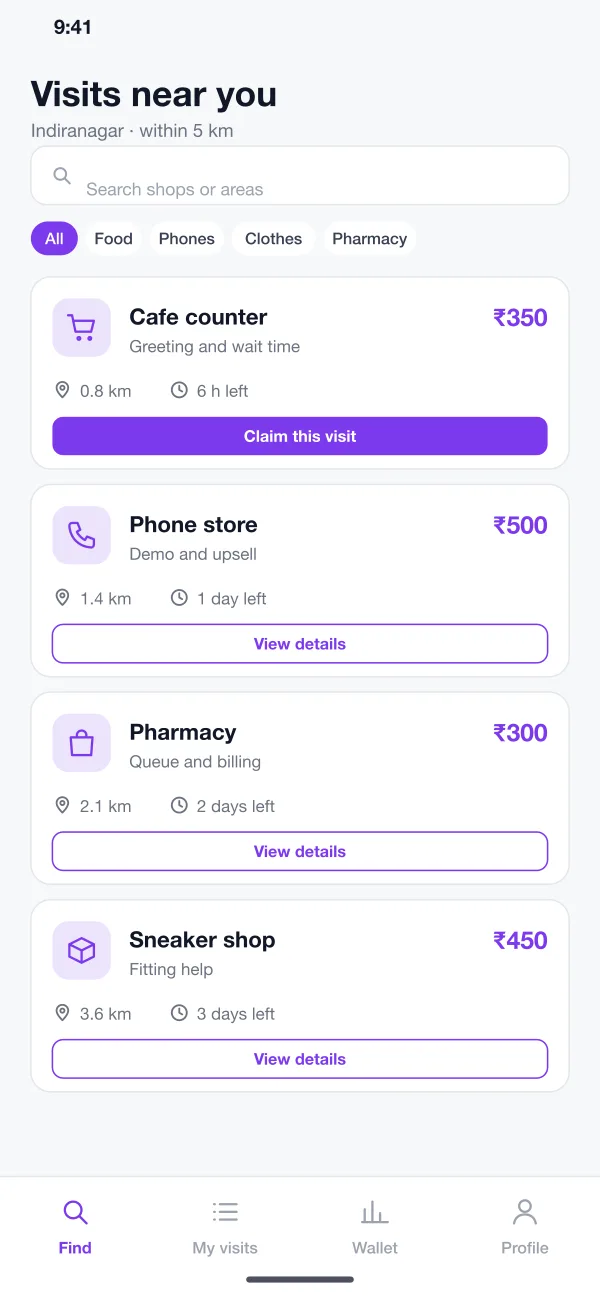
Shoppers browse nearby audits on a list, see the pay and the time left, and claim one in a tap. Once claimed, nobody else can take it.
III.Guided questionnaire
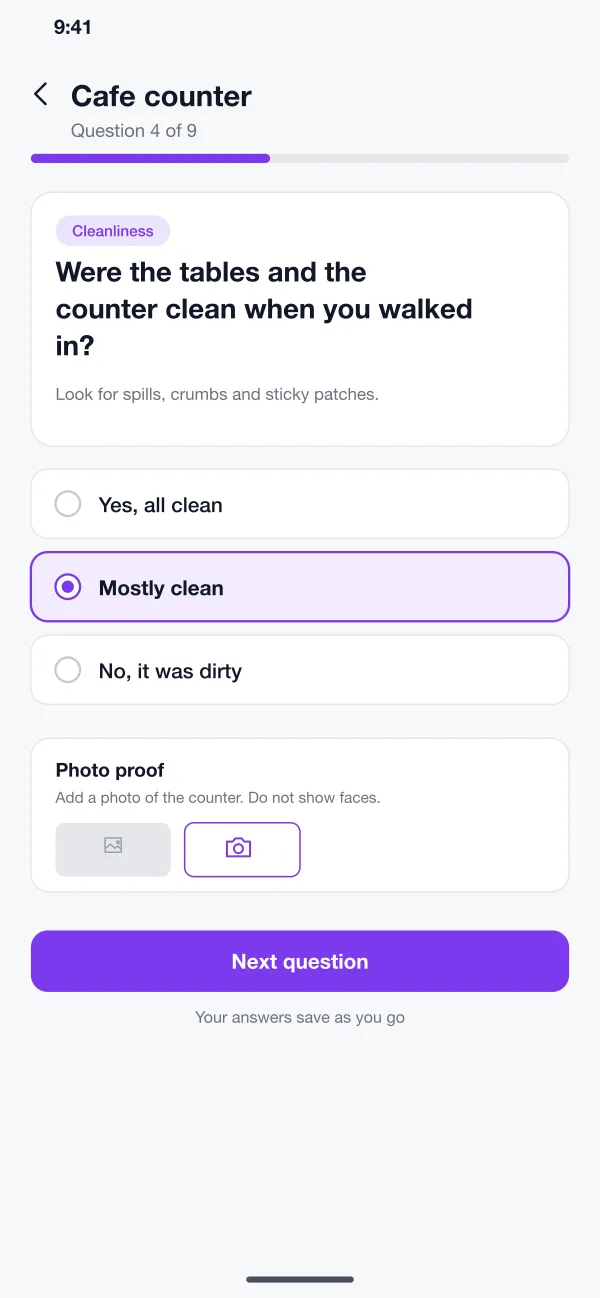
The app asks one question at a time, with a short hint on what to look for. Some questions need a photo. Answers save as the shopper goes, so a dropped signal loses nothing.
IV.Proof checks
The reviewer sees where the phone was, the time of the visit, the photos and the receipt. Anything that looks wrong can be sent back to the shopper with a note.
V.Scored reports
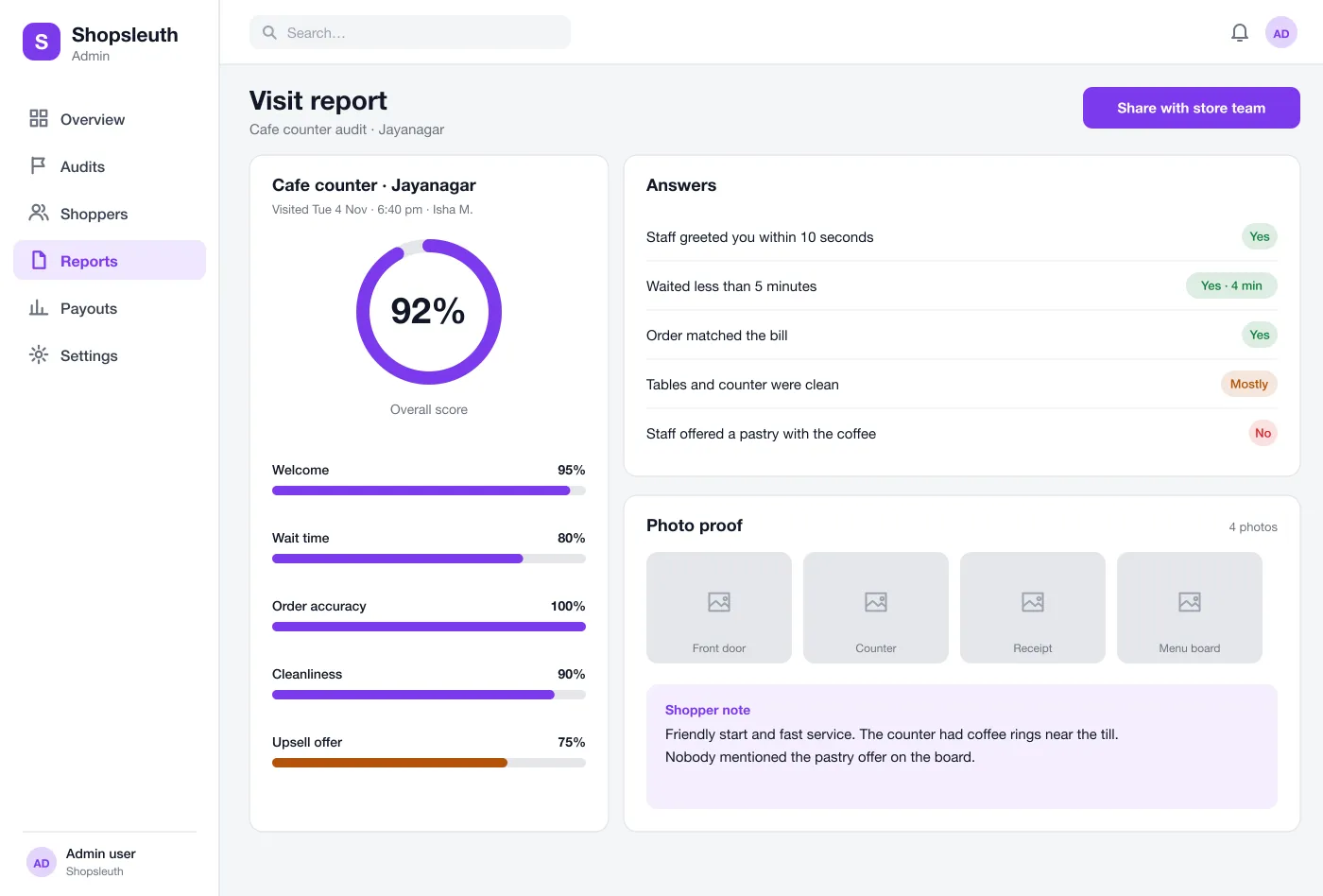
Each report shows an overall score, a score for each topic, the answers and the photos. The brand can share the report with the store team.
VI.Shopper wallet
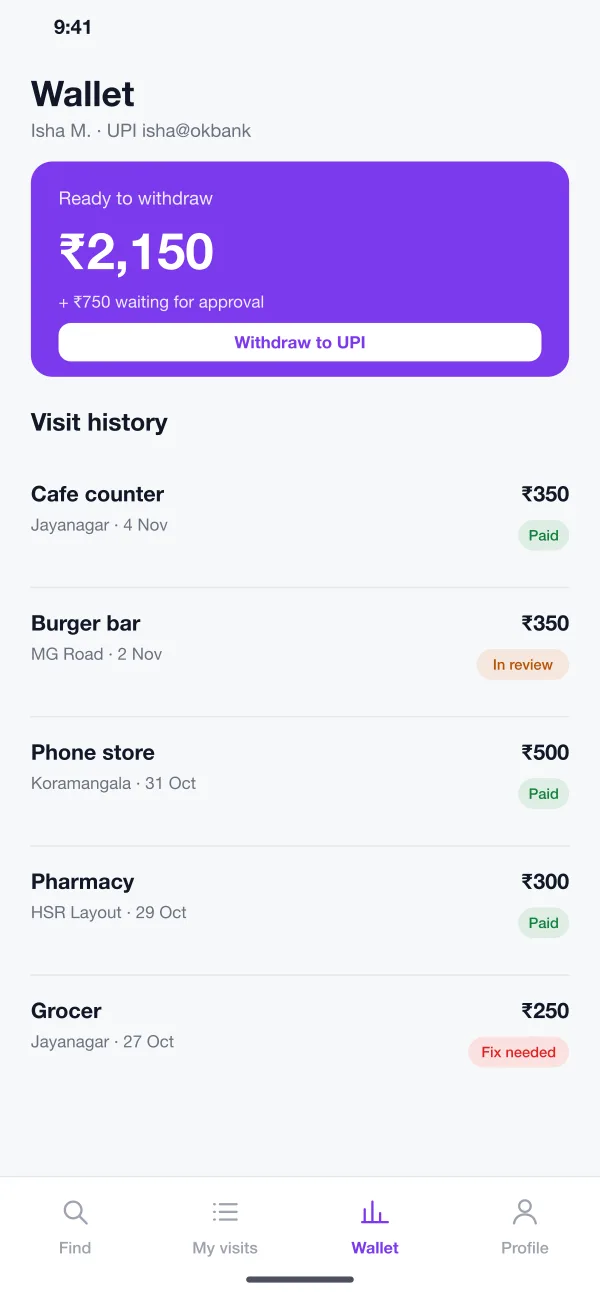
Approved visits add to the shopper's wallet. The shopper sees what is ready, what is waiting for approval, and withdraws to UPI.
Screens
The visit, in screens
PLATE 1Shoppers see nearby visits with the pay and the time left to claimPLATE 2A guided questionnaire: one question at a time, with photo proofPLATE 3Wallet: pay for each approved visit, paid out to the shopper’s UPI
PLATE 4Visit report: scored answers, photo proof and the shopper’s notes
How it works
One audit, from post to payout
1
Post an audit
The brand picks the store and questionnaire, sets the pay and publishes. Shoppers nearby can see it straight away.
2
Do a visit
The shopper claims the audit, visits the store as a normal customer, answers the questions and uploads the photos and receipt.
3
Review the report
The reviewer checks the proof, approves or returns the visit, and the brand reads the scored report.
4
Get paid
Approved visits move into the wallet. The shopper withdraws to UPI and sees a note for any visit that was held back.
Who it is for
Who uses it
Brands
Post store audits and read scored reports on the web.
Shoppers
Claim nearby visits, answer questions and upload your proof.
Reviewers
Check the proof, send a visit back with a note, or approve it.
FAQ
Questions and answers
What is a mystery shopping app?
It connects brands with ordinary people who visit a shop as a normal customer and then report on the service. The app gives the shopper the task, the questions to answer and a way to upload photos, and it gives the brand a scored report.
What decides the cost and timeline of a mystery shopping app?
The main factors are the questionnaire builder, how visits are checked (location, photos, receipts), the review workflow, payouts and the reports brands need. A first version often covers one brand console, the shopper app and payouts, with deeper reports added later.
Can you build a mystery shopping app like this for my business?
Yes. We can build the web admin for your team and the shopper app for Android and iOS, with your own audit forms, scoring rules and payout method.
How does the app check that a shopper really visited the store?
The app uses a few simple checks together: the phone location at the shop, photo proof taken in the app, and a receipt photo. A reviewer can see all three before approving the visit.
Can a brand make its own questionnaire?
Yes. The brand builds the questions, marks which ones need a photo, and sets how much each answer counts towards the score.
Follow one audit from post to payout
See the brand console, the shopper app and the review screens.