The case board
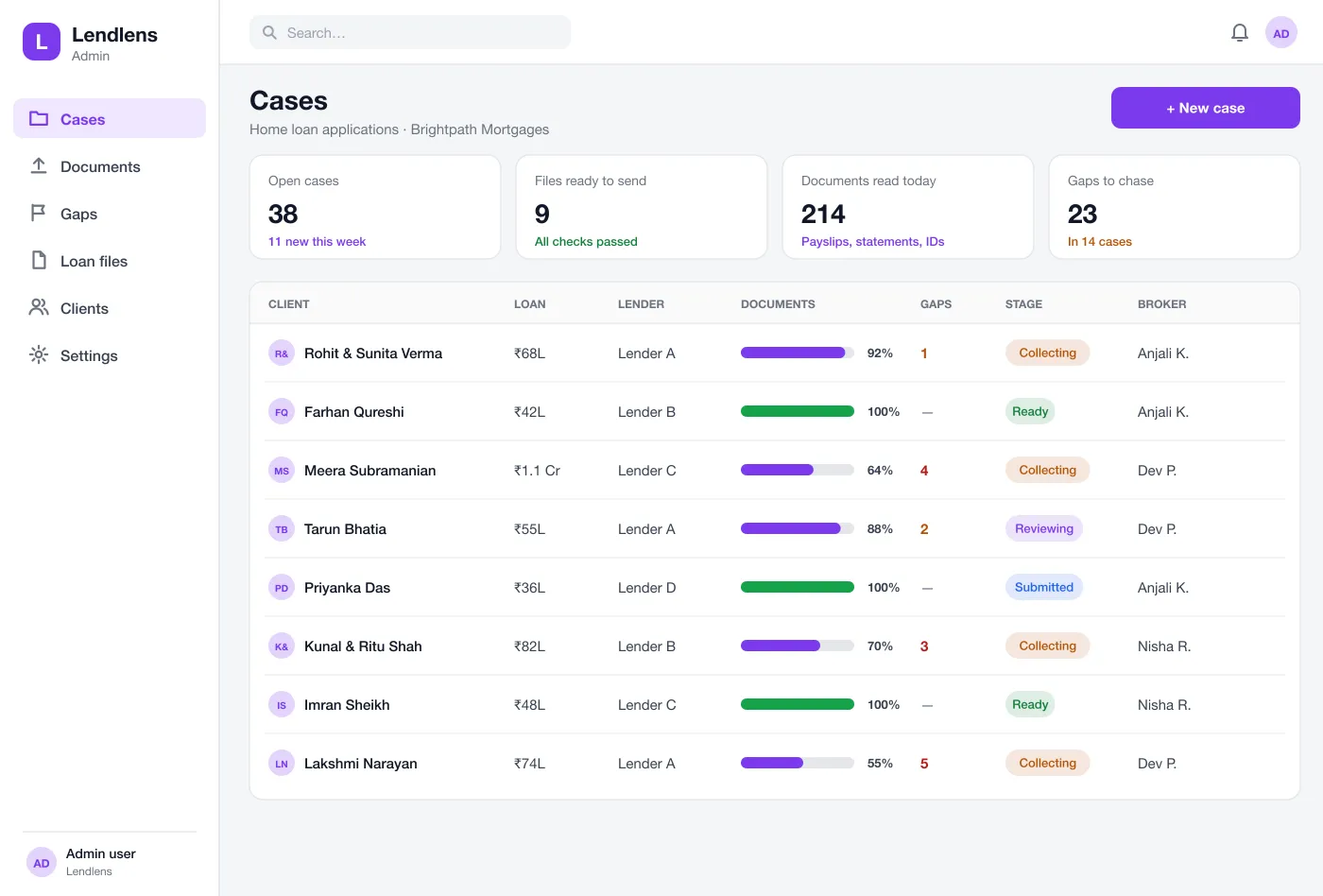
Every client case is on one list with the lender, the share of papers received, the number of gaps and the stage. Cases that need work stand out.
A mortgage file is only as good as its papers. Lendlens reads them for you, shows where every number came from, and tells you what is missing before the lender does.
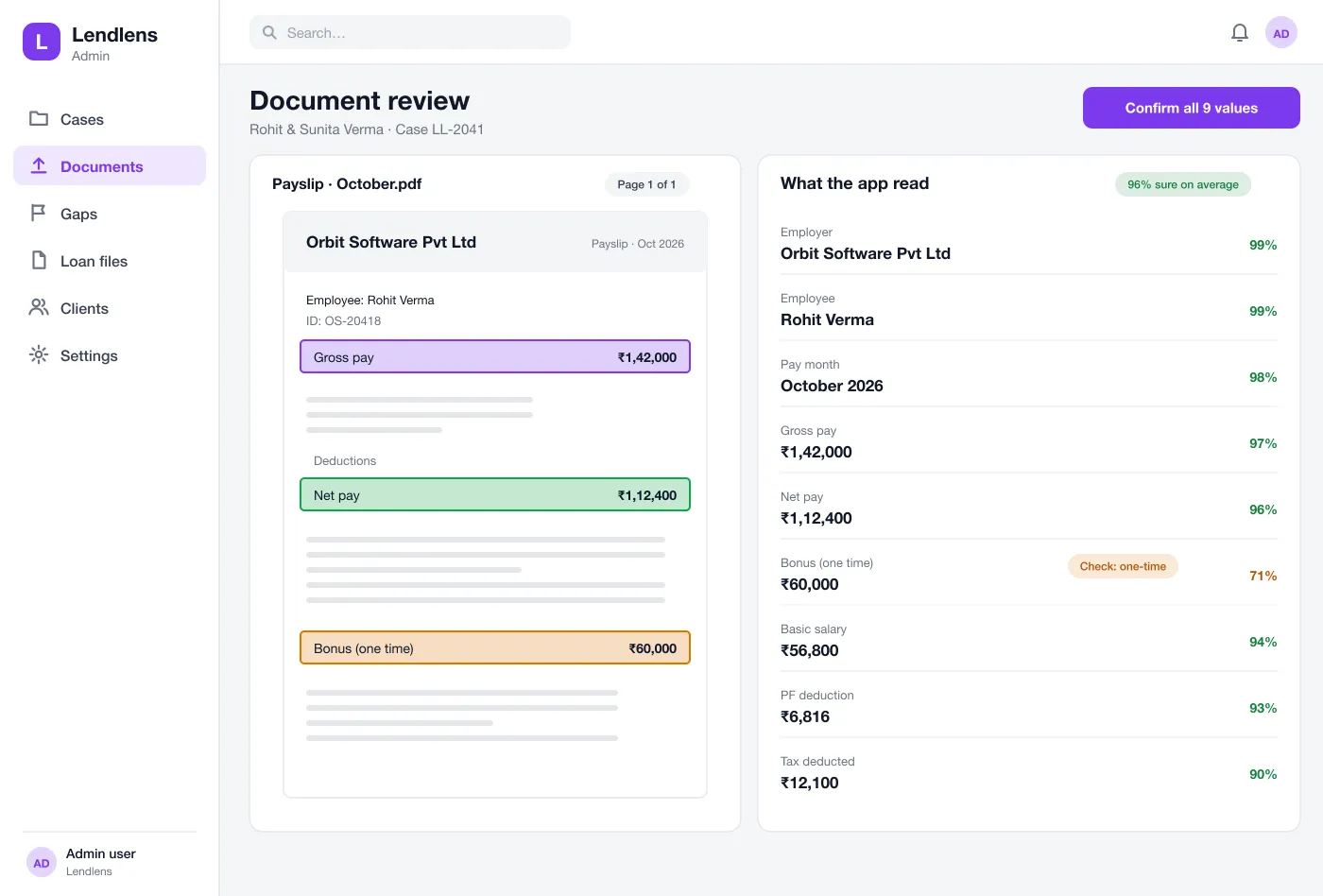
Pay, dates and account details are pulled from payslips and statements.
Each value sits beside the page it came from, with a confidence mark.
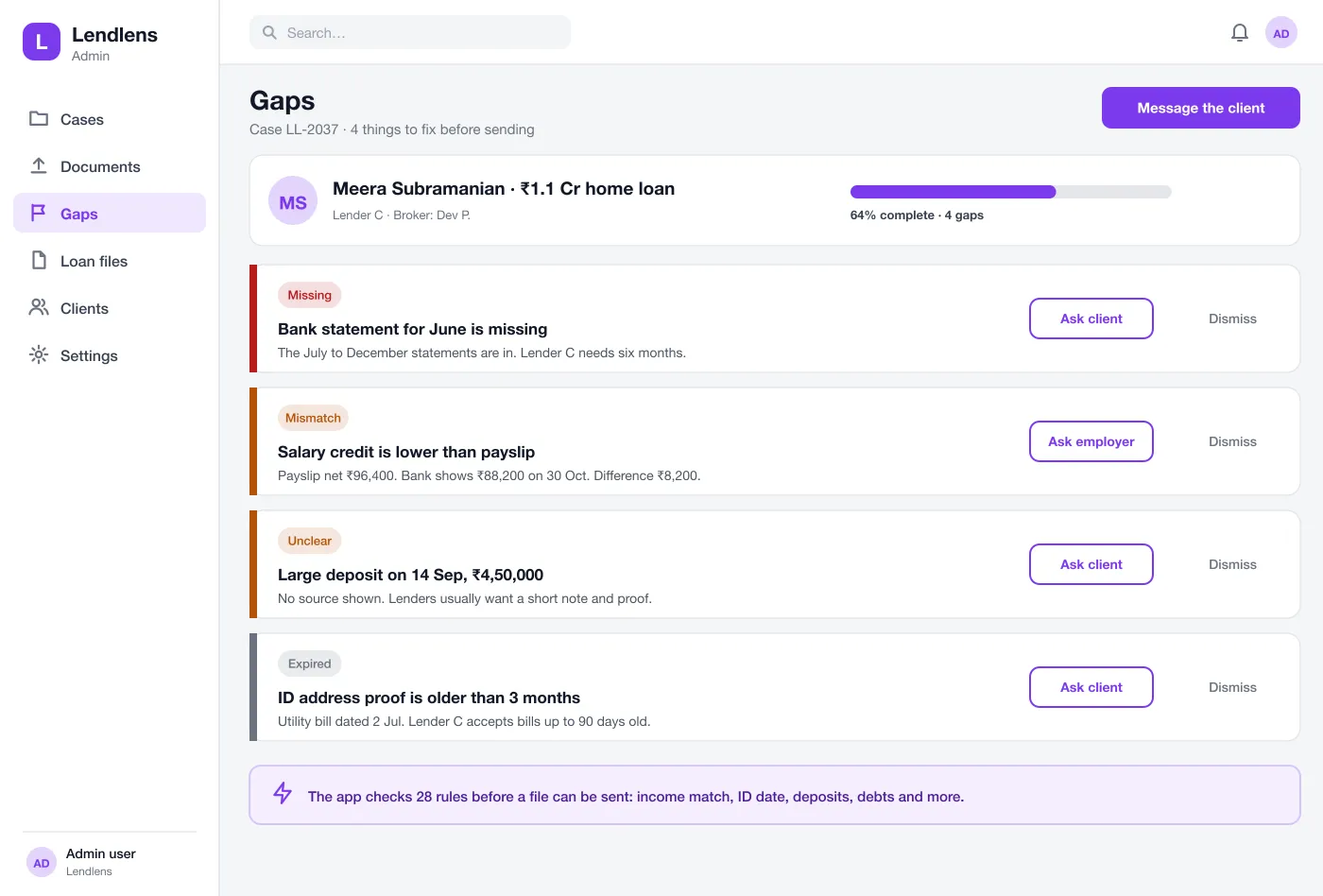
Missing papers and rule problems are listed, with a button to ask.
Every client case is on one list with the lender, the share of papers received, the number of gaps and the stage. Cases that need work stand out.
Uploaded files are sorted by type. The app reads values from payslips, statements and IDs, such as pay, dates and account details.
The broker sees the original page on one side and the values on the other. Each value is linked to the place on the page and shows how sure the app is.
Every value sits beside the page it came from, so the broker checks the reading instead of retyping it.
The app compares papers with each other and with the lender’s rules. Each problem is listed with the reason and a button to ask the client or the employer.
The broker sends the client a short message with exactly what is missing. New uploads are read and checked again.
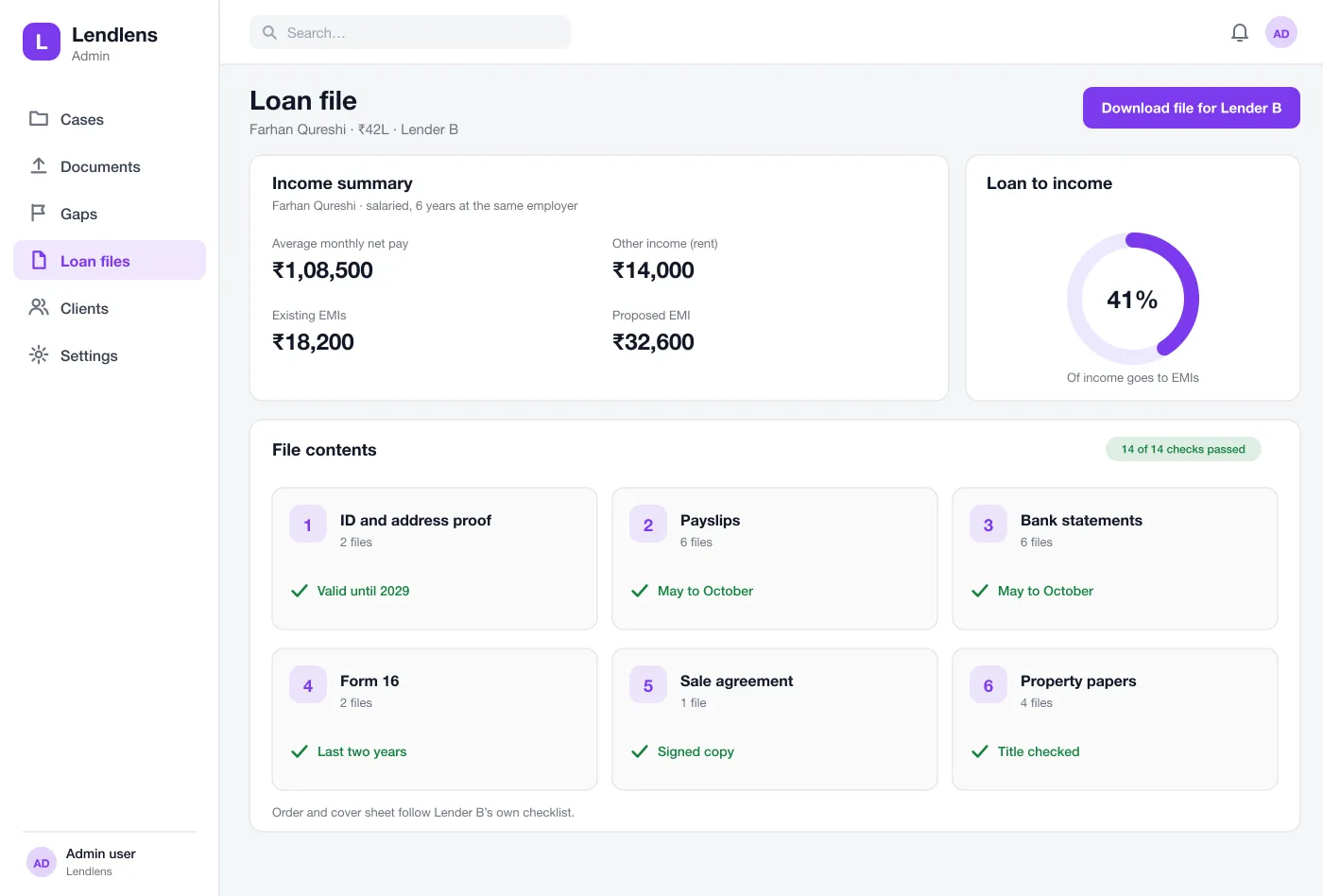
When all checks pass, the app builds the file in the lender’s order with an income summary, EMI share and a cover sheet.
Track each client case, review the reading and send the file.
Upload papers from a phone link when asked.
Follow up on missing papers and recheck each new upload.
The broker adds the client and picks the lender. The client gets a link to upload papers from their phone.
The broker opens a payslip, checks the nine values against the page and fixes the one marked as doubtful.
The app flags a missing June statement. The broker sends a request and the next upload clears the gap.
With every check passed, the broker downloads the loan file for the lender and marks the case as submitted.