Home page
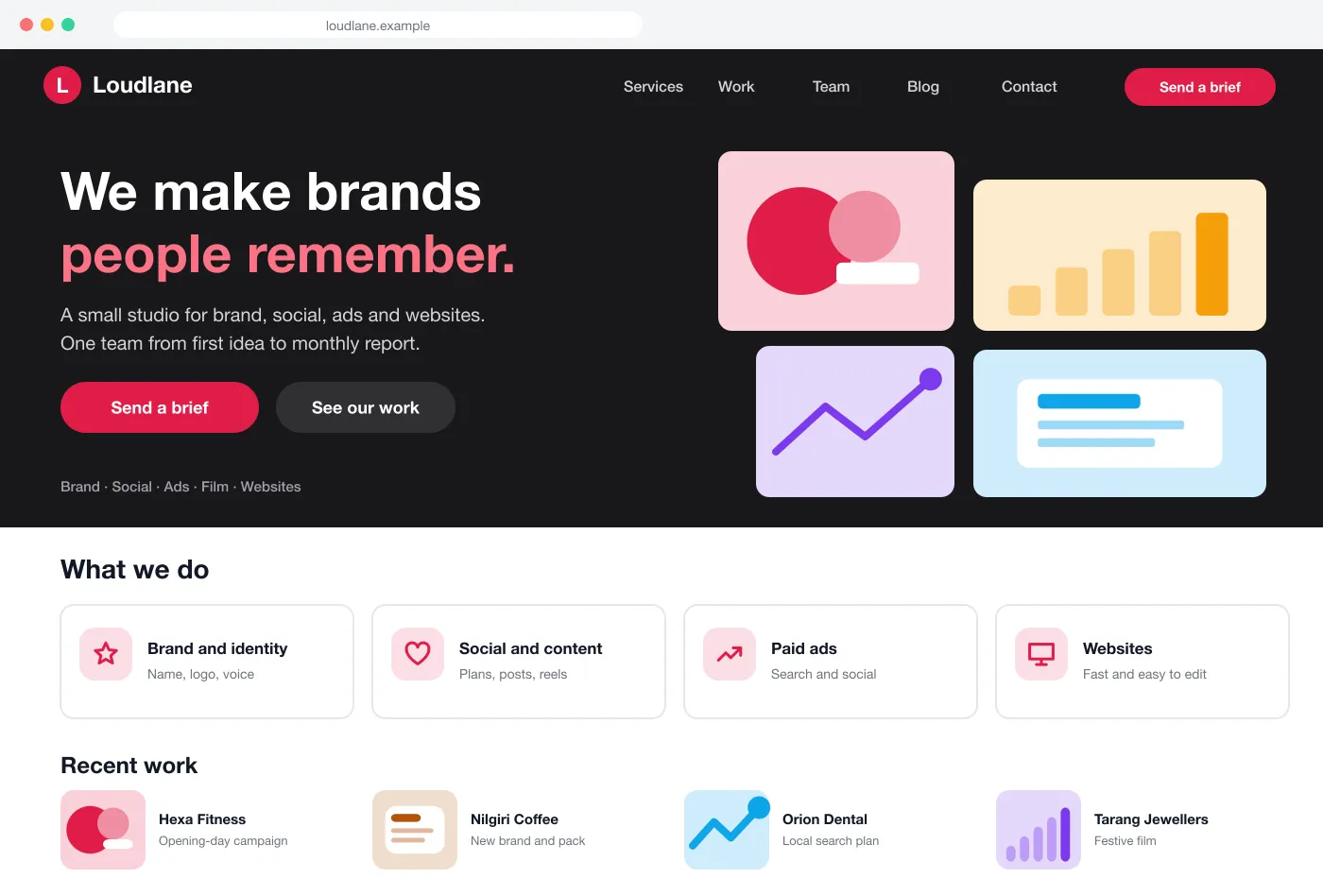
A bold first screen says what the agency does in one line. Below it are the four services, a few recent projects and a button that is always one click away.
Loudlane is a marketing agency website designed and built by our team. It shows services, work written as short stories, the team and a blog, and it turns a short brief form into a tidy inbox the team can answer.
Loudlane was designed and built by the PRS CloudTech team.
The brief
A marketing agency sells its taste and its results, and its website is the first proof of both. Many agency sites look good but say little. A visitor cannot tell what the agency does or what a project was for.
The contact form is often one box that says Message. Requests come in with no goal and no budget, and the team spends a week asking questions by email before any real talk begins.
Say what you do
Services should be named in plain words a business owner would use, with a clear next step.
Show work as a story
Each project should state the goal, what was done and what happened, not only a picture.
Show the people
Clients hire people. A team page and a blog give a face and a voice to the agency.
Get a useful request
The form should collect enough to start a good reply and put it in front of the right person.
What we designed
We designed Loudlane as a public website and a small admin. The site is made to be read quickly. The admin keeps the briefs in order.
A bold first screen says what the agency does in one line. Below it are the four services, a few recent projects and a button that is always one click away.
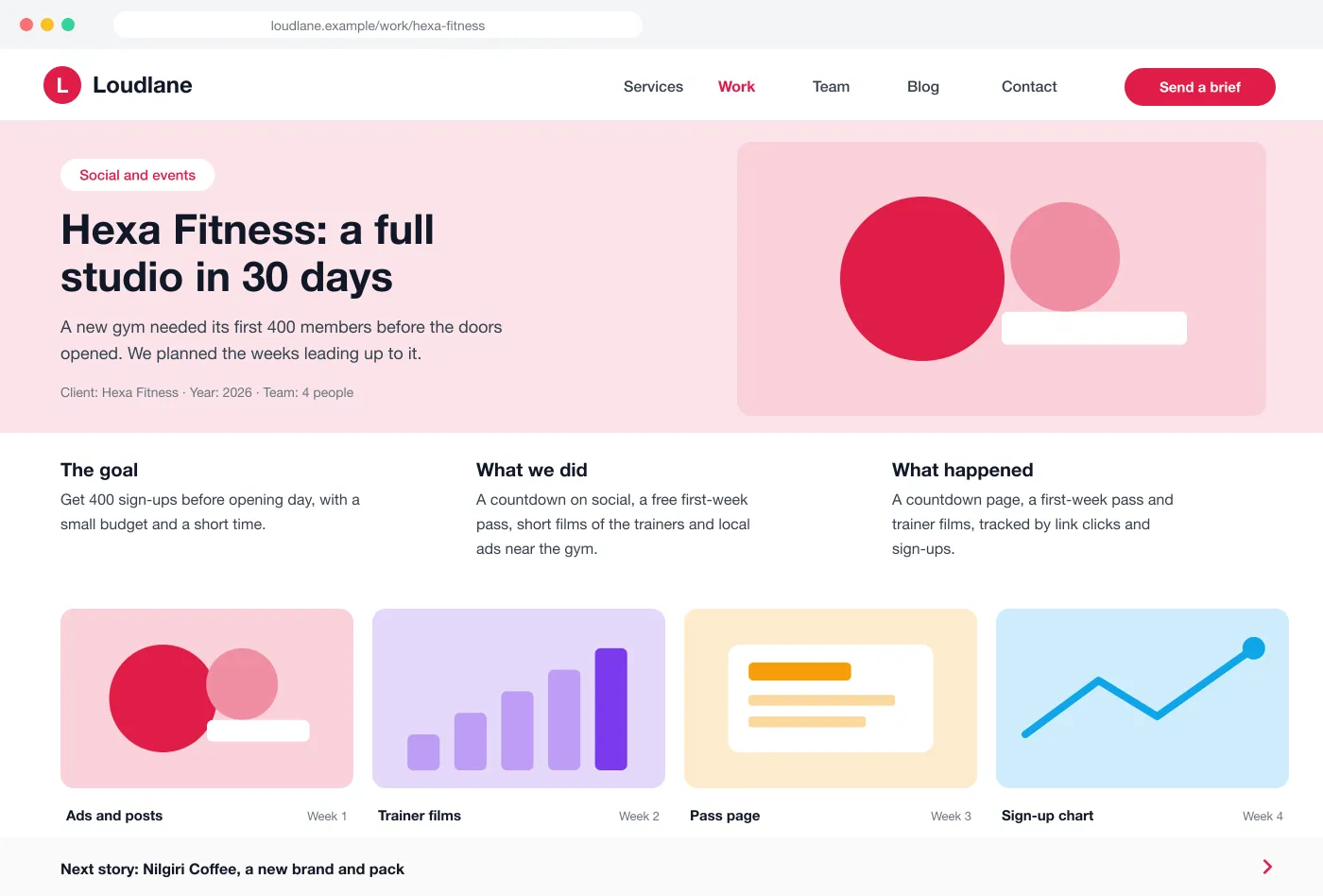
Each project has the same shape: the goal, what the team did, what happened and a set of images. Visitors can read it in a minute.
A team page shows who does what. The blog lets the agency share tips and shows up in search results for the topics clients care about.
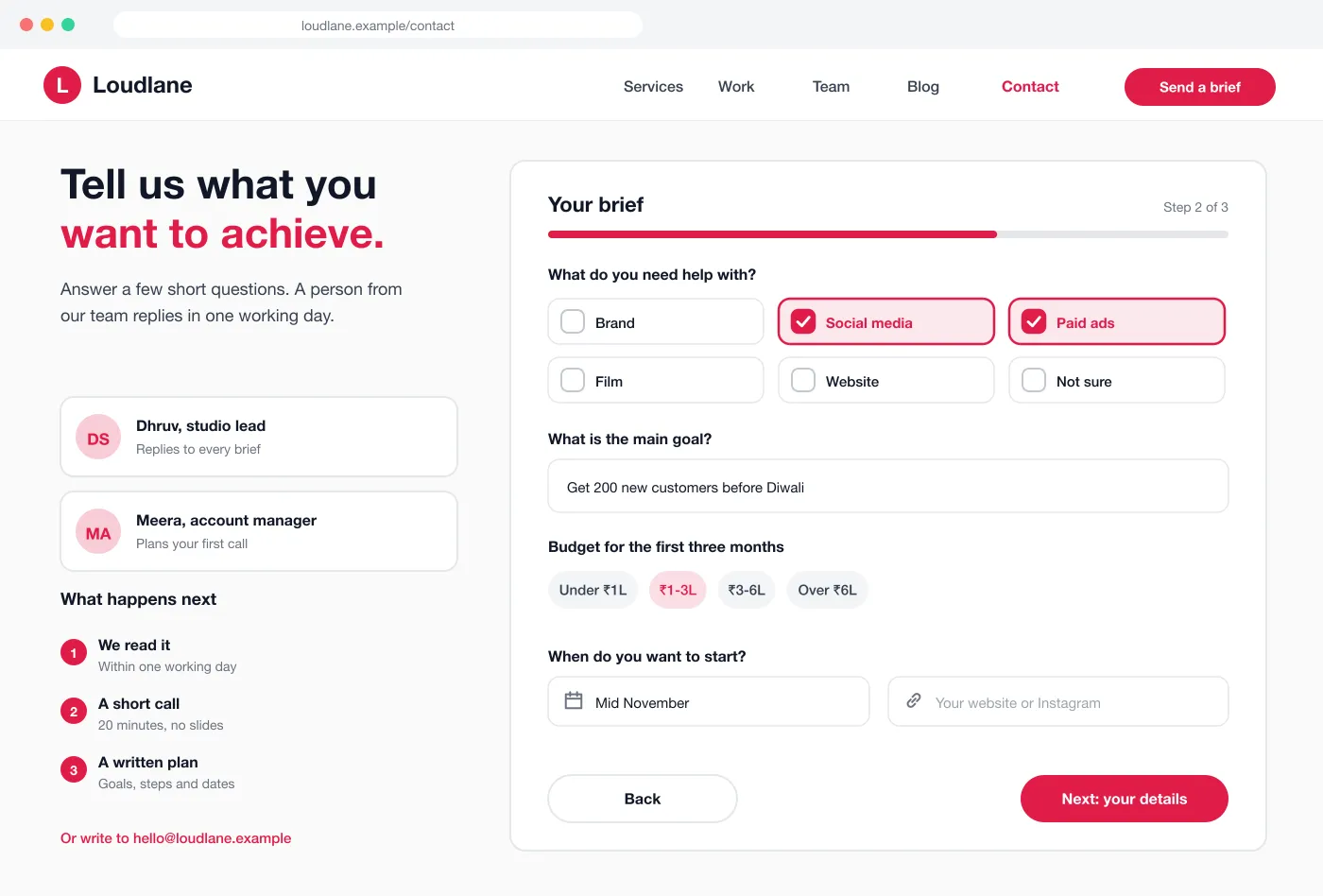
The form takes three short steps. It asks what help is needed, the main goal, the budget band and the start date. It tells the visitor what happens next.
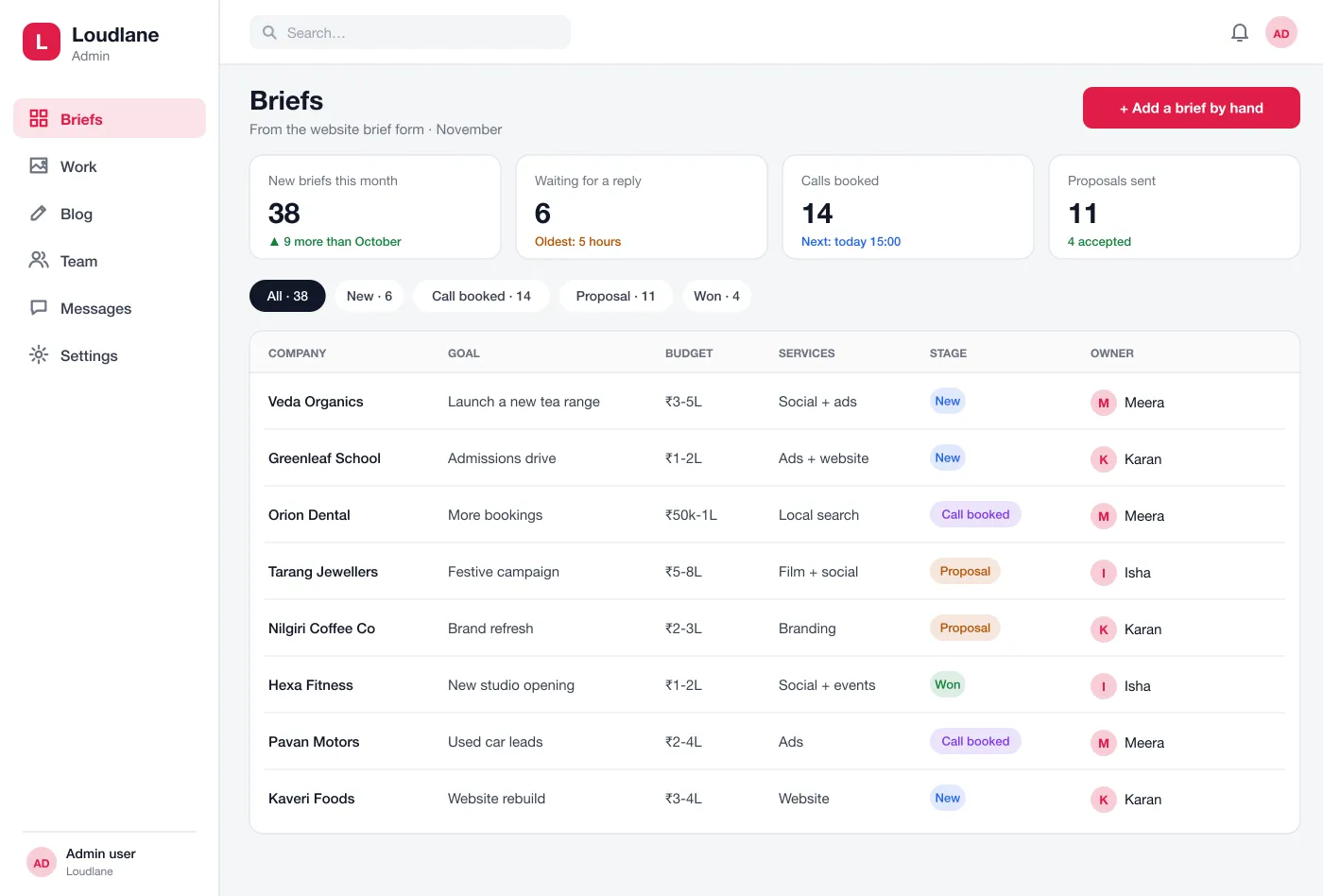
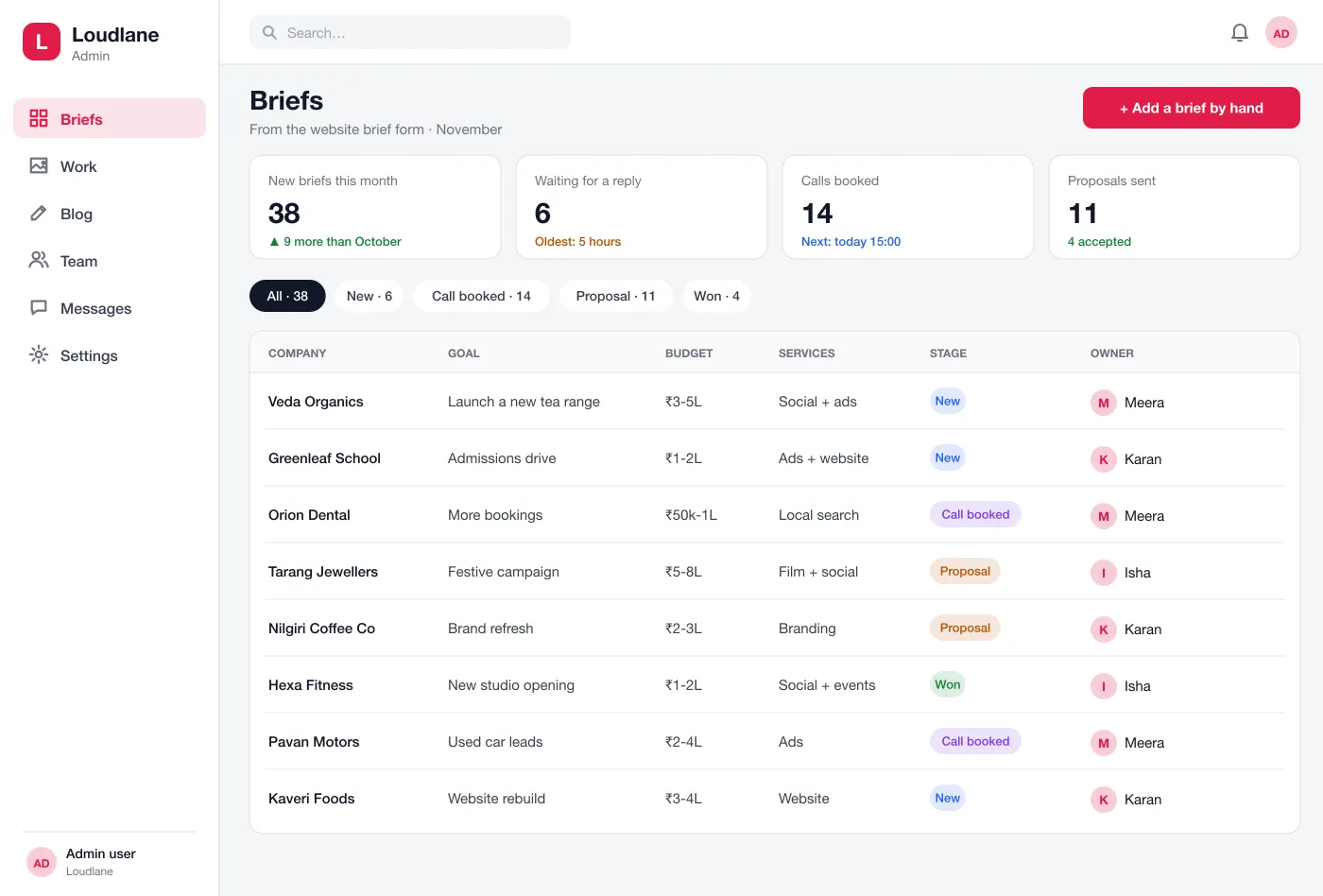
Every brief lands in the admin as a row with the company, goal, budget, services and stage. The team gives each brief an owner and moves it from New to Won.
Staff add a new project, a post or a team member with a form. The page layout stays the same, so the site stays tidy as it grows.
Screens
How it works
Here is how the main tasks work, from a visitor’s first look to a signed project.
Look around
A business owner reads the home page, opens a work page that looks like their own problem and decides to get in touch.
Send a brief
The owner fills in the three-step form in a few minutes and sees a message that says who will reply and when.
Reply and book
The team sees the brief in the inbox, takes it, replies and books a short call.
Add new work
After a project ends, the team adds a work page and a blog post, so the site stays fresh.
Suggested technology
What we would deliver
FAQ
It should say clearly what the agency does, show real work with the goal and the result, introduce the people and make it easy to get in touch. A blog helps people find the agency through search.
It depends on the number of page types, how much of the work section is ready, whether the brief form feeds a CRM, and how many rounds of design review you want. Writing the copy and gathering project photos often takes longer than the build.
Yes. We can design and build the public site and an admin where your team adds work, posts and team members and reads the briefs that come in.
A brief form asks for the goal, the budget and the start date. The agency gets what it needs to reply well and can sort the requests by stage and by owner.
Yes. Work pages, team members and blog posts are all edited in the admin with simple forms, with no code.
Tell us who will use it and what it must do. We will reply with a plan, a timeline and a price.