Part request form
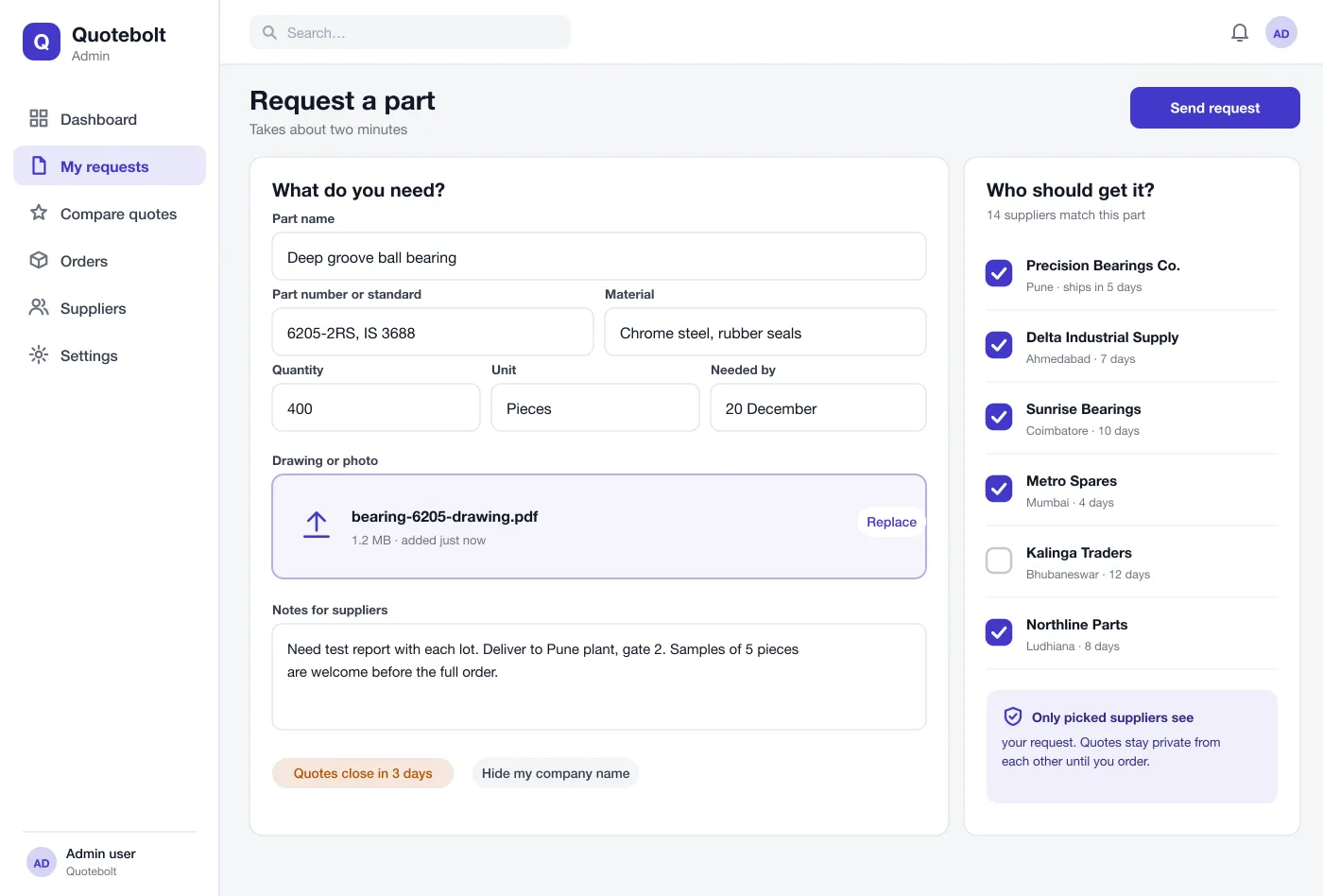
The buyer writes the part name, number, material, quantity and date, and adds a drawing. A note box covers test reports and delivery details.
Quotebolt is a marketplace for buying industrial parts by quote, designed and built by our team. A factory describes the part it needs, picked suppliers send prices, and the buyer compares them side by side and orders.
Quotebolt was designed and built by the PRS CloudTech team.
The brief
A factory runs on small parts: bearings, hoses, valves, fasteners. Each one is bought by phone or WhatsApp from a few known suppliers. The buyer asks for prices one by one, writes them in a sheet and hopes nothing is missed.
Quotes come in different forms. One supplier forgets the delivery time, another adds a condition late. Comparing them takes hours, and the buyer never knows if there was a better offer.
One clear request
The part, number, quantity, drawing and date should go to many suppliers in one go.
The right suppliers
Only suppliers that make or stock the part should get the request.
Quotes that can be compared
Every supplier should answer the same questions, so the answers line up.
Private prices
A supplier’s price should be seen only by the buyer.
What we designed
We designed Quotebolt with three roles: a buyer, a supplier and an admin who keeps the catalogue and supplier list in order.
The buyer writes the part name, number, material, quantity and date, and adds a drawing. A note box covers test reports and delivery details.
The site suggests suppliers that stock or make the part. The buyer ticks the ones to ask and can hide the company name.
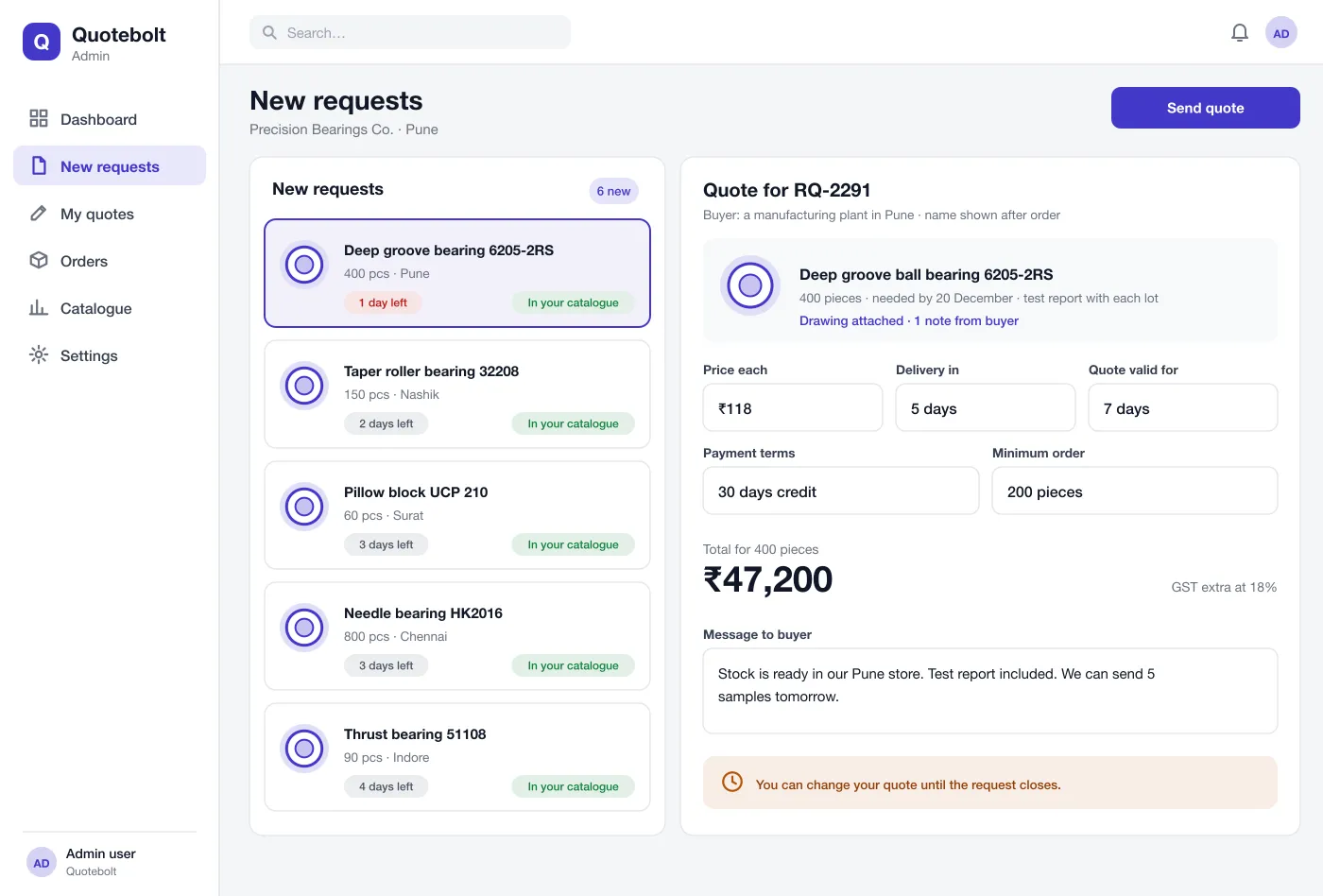
Suppliers see requests that match their catalogue, with the time left. A short form takes price, delivery, validity, payment terms and minimum order.
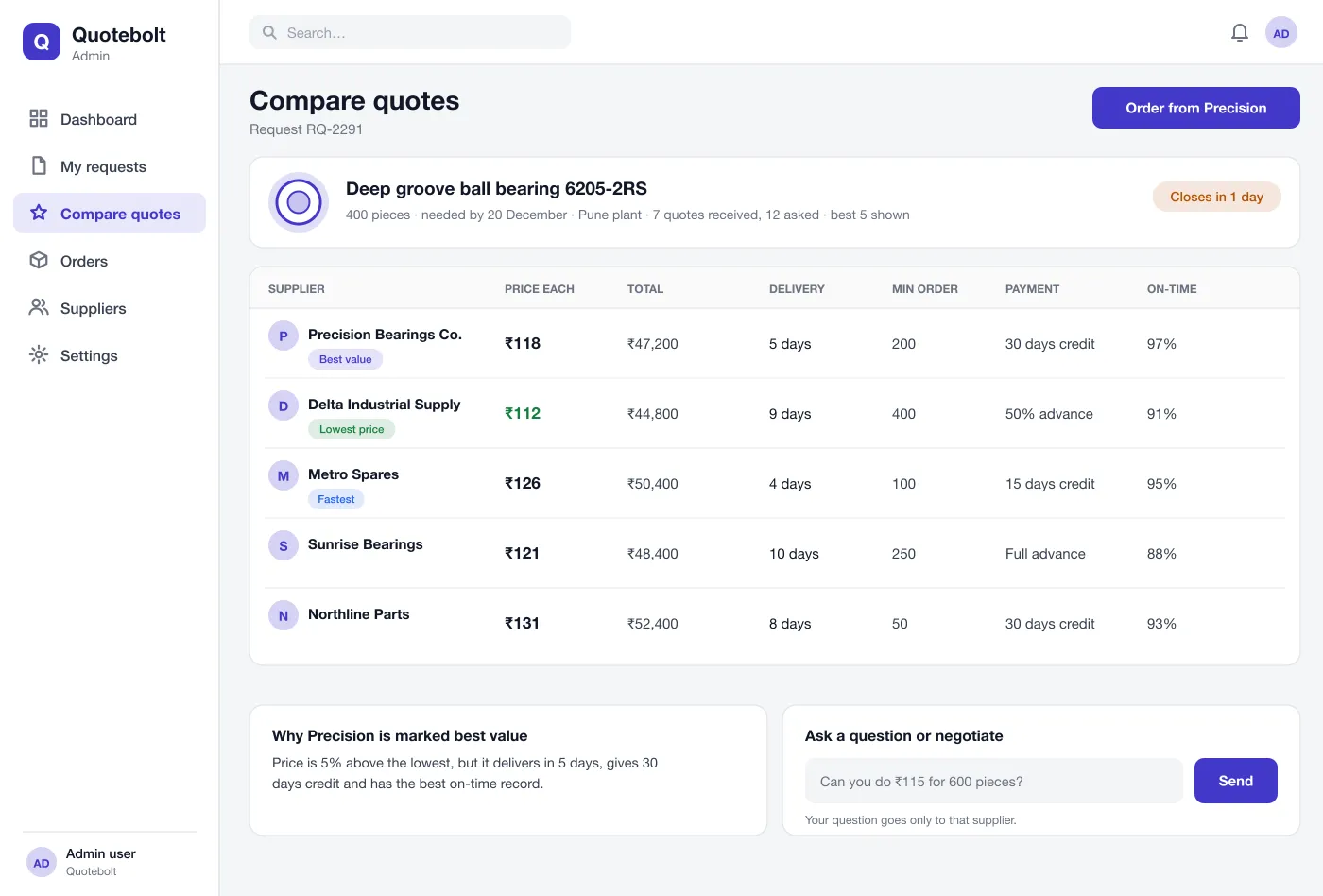
The buyer sees all quotes in one table with the total, delivery days and on-time record. Tags mark the lowest price, the fastest and the best value.
The buyer can ask one supplier a question or ask for a better price on a bigger order, without other suppliers seeing it.
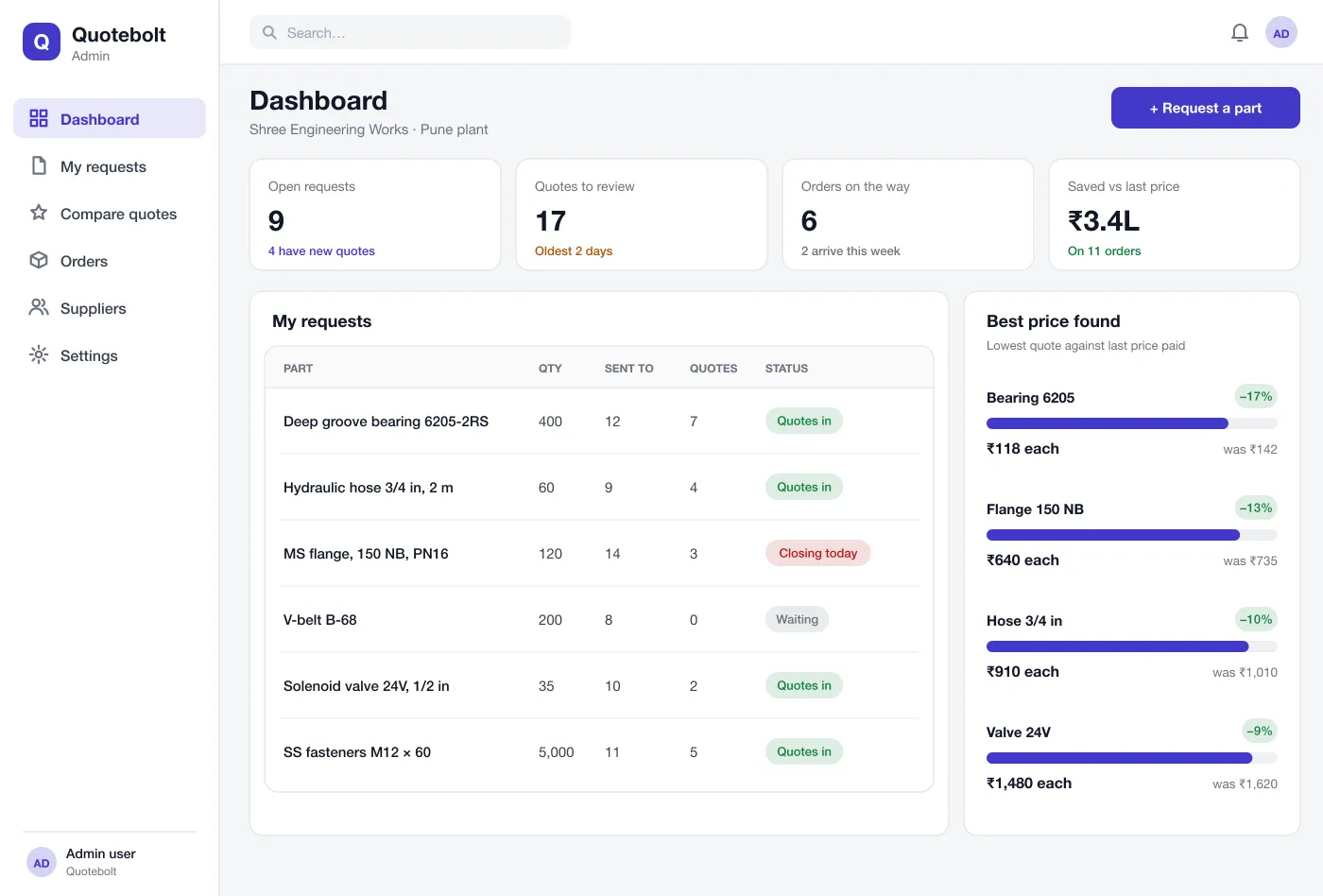
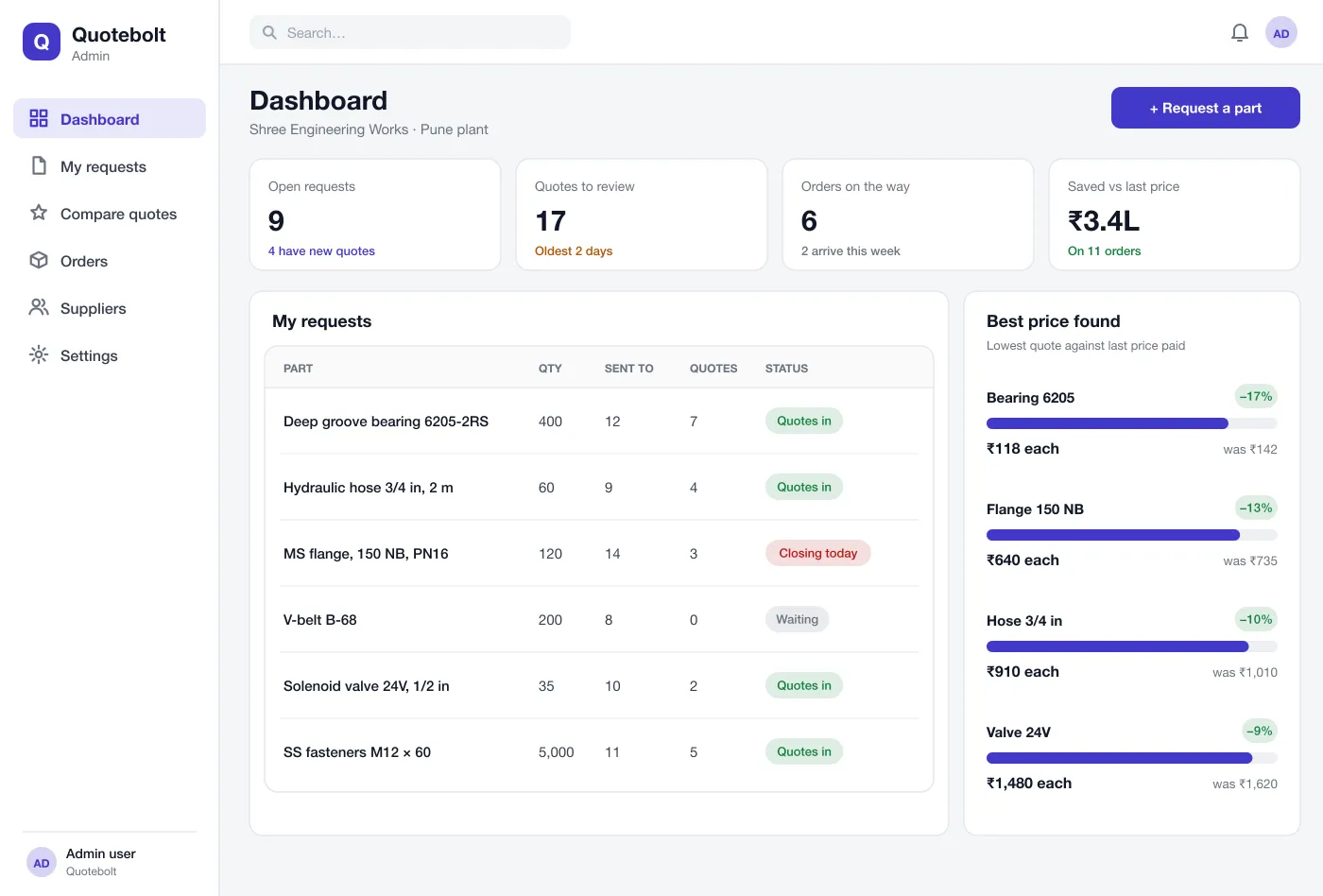
An accepted quote becomes an order. The dashboard shows each part’s best price against the last price paid.
Screens
How it works
Here is how the main tasks work on the marketplace, from the first request to the order.
Ask for a part
A buyer fills the form in about two minutes, adds the drawing and sends the request to the suppliers they pick.
Send a quote
A supplier opens the request, fills in the price and delivery and sends. They can change it until the request closes.
Compare and choose
The buyer reads one table, asks a question to one supplier and picks the quote that suits.
Order and track
The order goes to the supplier with the agreed terms, and both sides can follow it until delivery.
Suggested technology
What we would deliver
FAQ
RFQ means request for quote. A buyer describes what they need and how many, and several suppliers reply with a price and delivery time. The buyer picks the best offer.
It depends on the number of roles, how quotes are compared, approval steps on the buyer side and links to ERP or accounting tools. We plan it in phases, so requests, quotes and comparison come first and the rest follows.
Yes. We can build the buyer side, the supplier side and the admin panel, and connect them to your catalogue, your payment gateway and your accounts software.
In this design they cannot. Each supplier sees only their own quote. The buyer sees all of them in one table.
The table shows price, total, delivery time, minimum order, payment terms and on-time record. The page marks the lowest price, the fastest and the best value so the choice is easy.
Tell us who will use it and what it must do. We will reply with a plan, a timeline and a price.