Dispatch board
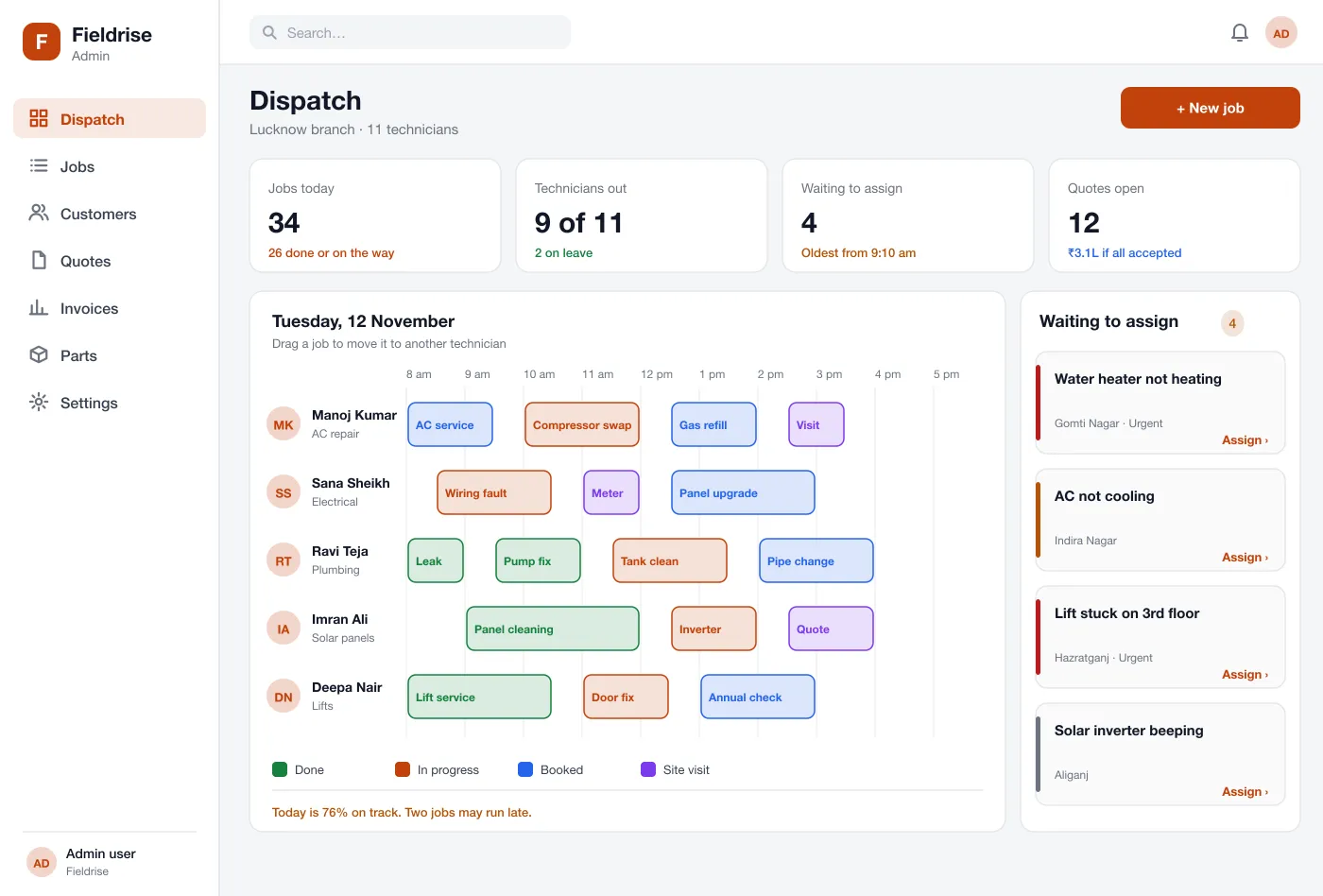
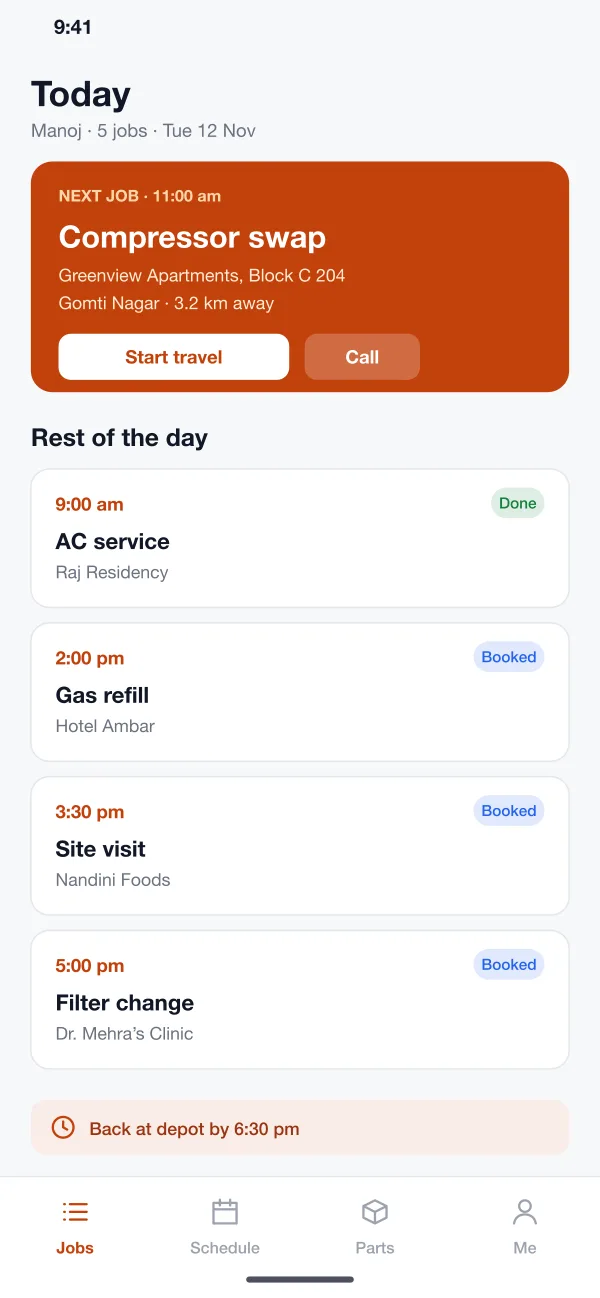
The office sees every technician's day as a row of time blocks. Urgent jobs wait in a side list and can be moved onto any technician's day. Colours show what is done, running or booked.
Fieldrise is field service software designed and built by our team. A repair or installation business uses it to take a job, send the right technician, quote the price, collect a signature and send the invoice. Each company that signs up gets its own private workspace.
Fieldrise was designed and built by the PRS CloudTech team.
The brief
A service business sends people out all day. A technician fixes an AC, a pump or a lift, and then the paperwork starts. Someone has to log the job, the parts, the price and the bill.
Most small firms do this with phone calls, WhatsApp messages and a notebook. Jobs get double-booked. Parts are used but never billed. The invoice goes out a week late, or not at all.
Send the right person
The office needs to see who is free, where they are and what skill they have before they assign a job.
Keep the site details with the job
The technician should have the address, the customer's number and the gate notes without calling the office.
Price it before the work
The customer should get a clear quote, say yes, and the quote should turn into a job with one tap.
Bill on the same day
Parts, labour and tax should flow into the invoice as soon as the work is signed off.
What we designed
Fieldrise follows one job from the first call to the paid invoice. Here are its six main parts.
The office sees every technician's day as a row of time blocks. Urgent jobs wait in a side list and can be moved onto any technician's day. Colours show what is done, running or booked.
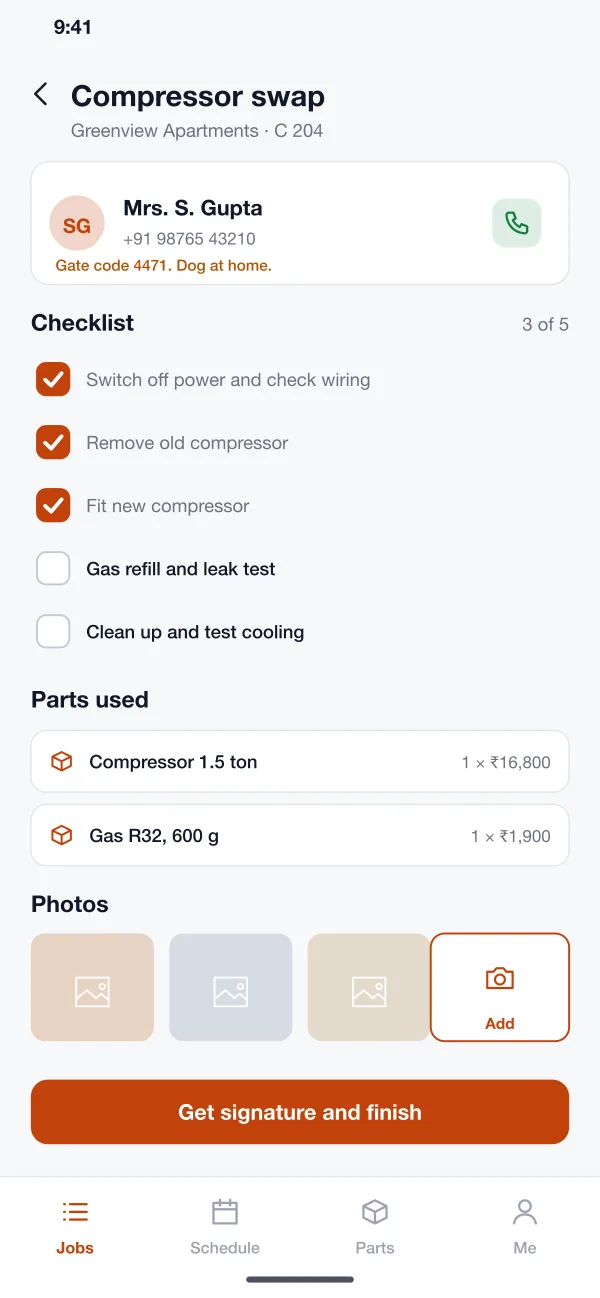
The technician sees today's jobs in order, with the next job on top. One tap starts travel, opens the map or calls the customer.
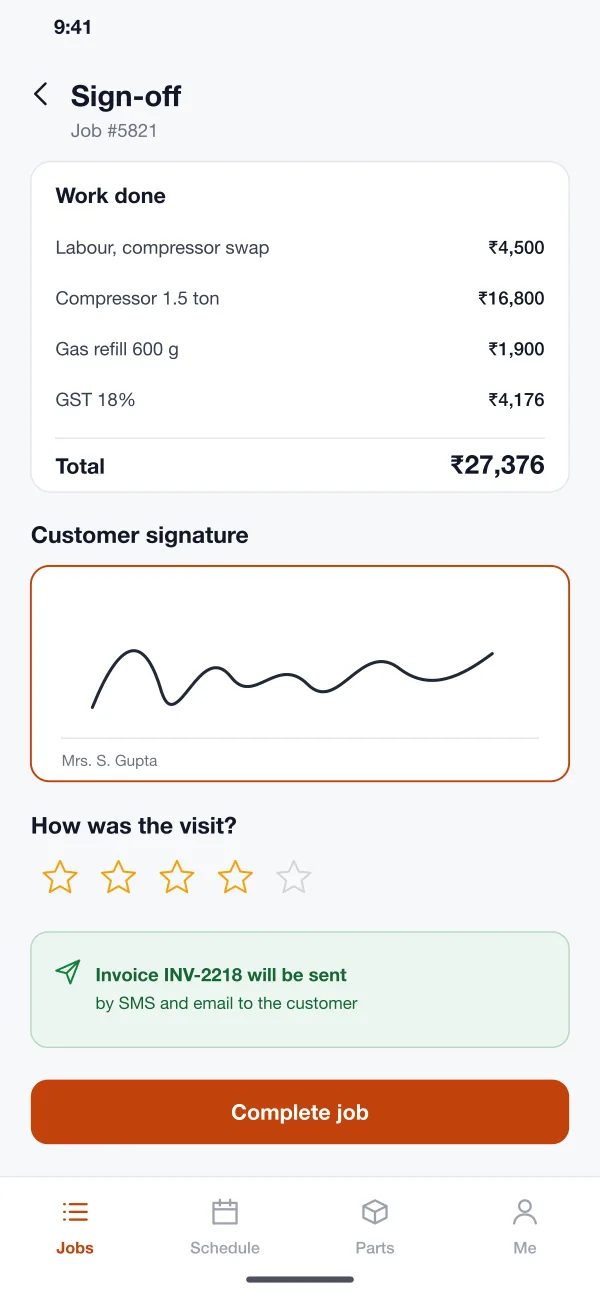
Each job has steps to tick off, parts used and photos of the work. The steps can be changed for each type of job, such as a lift service or a solar clean.
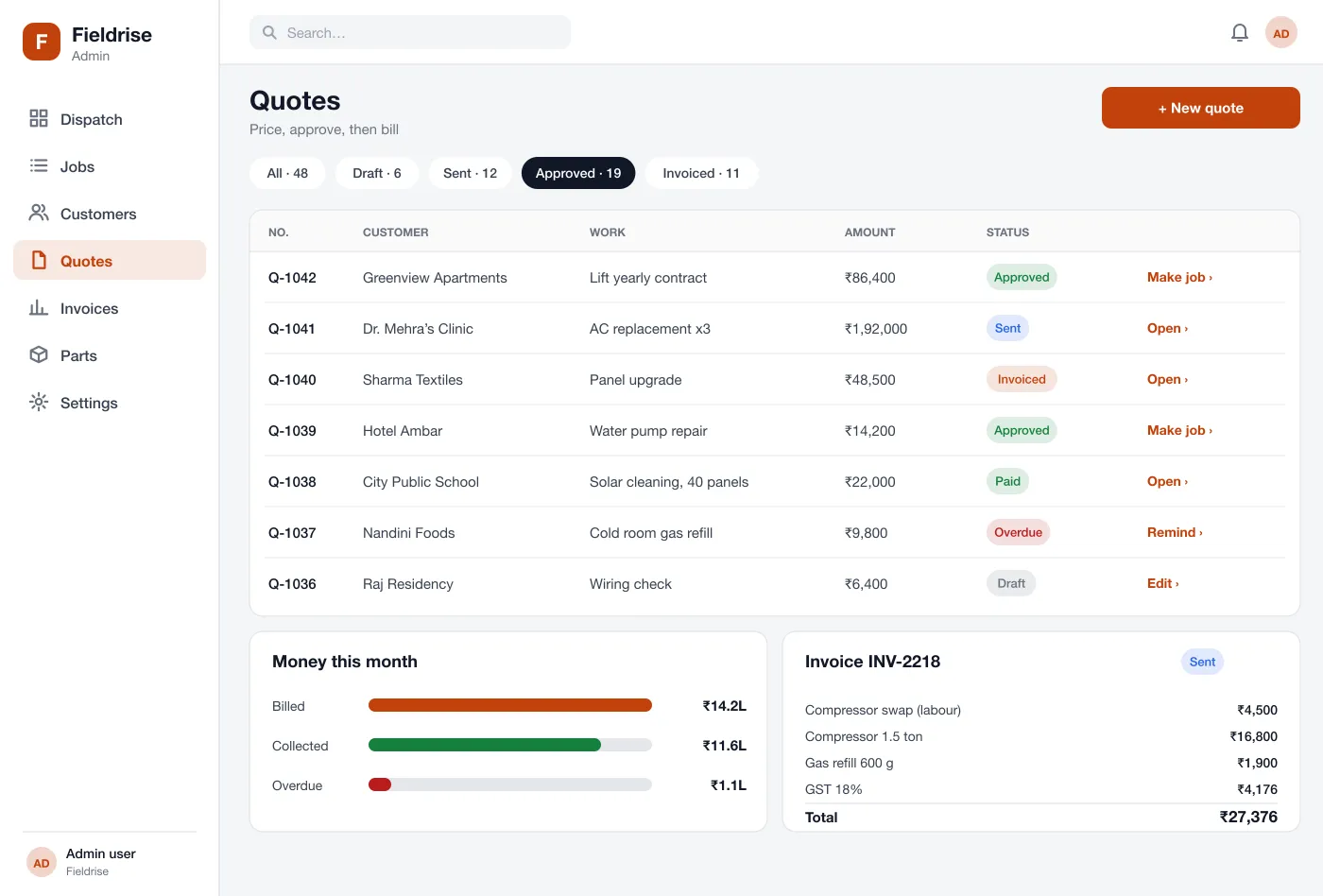
The office builds a quote from a price list and sends it to the customer. When the customer approves it, one tap turns it into a booked job.
Parts used on a job are taken off the stock list. The office sees what is running low before a technician arrives and finds the van empty.
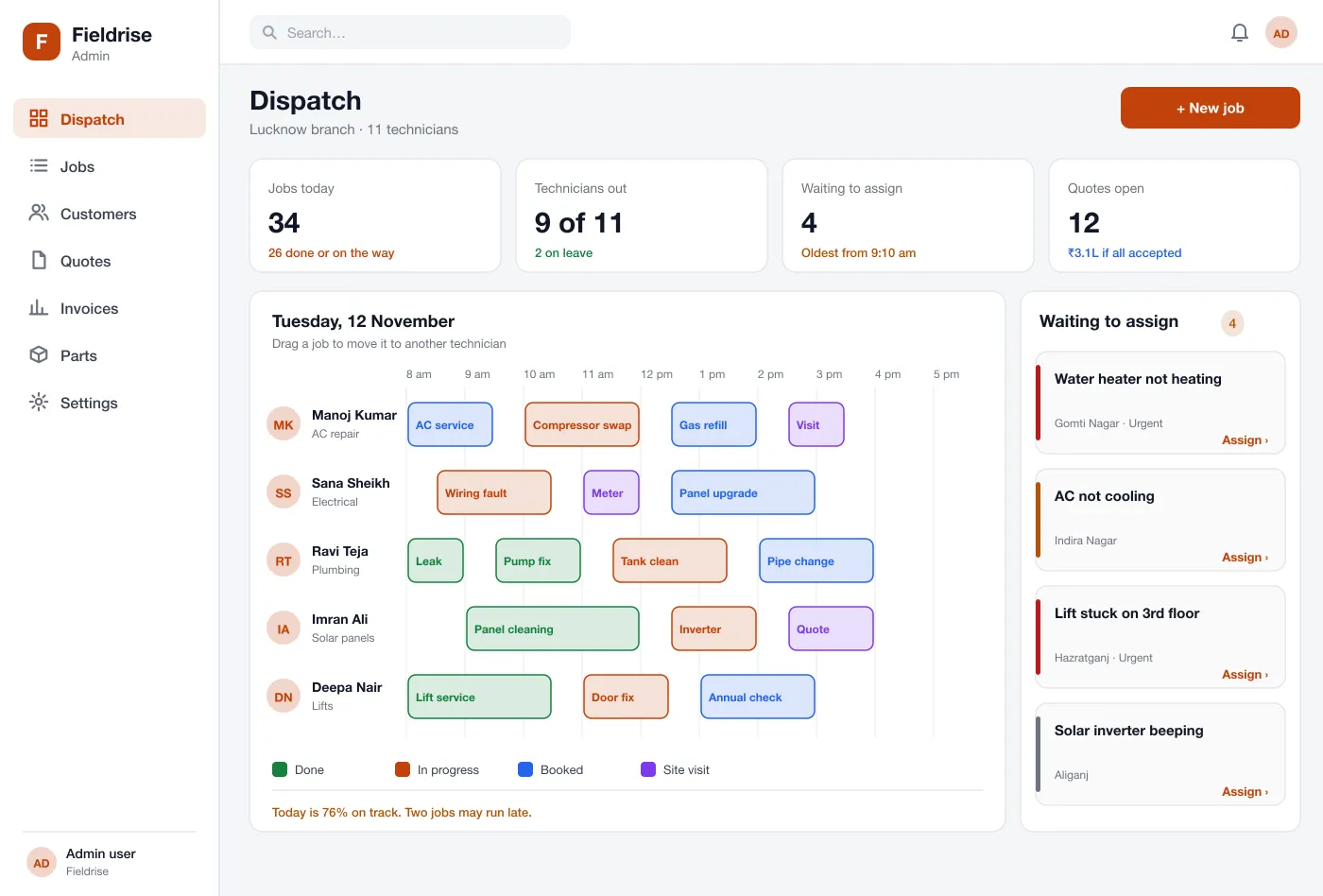
At the end of the job the customer signs on the phone. The invoice, with tax, goes out by SMS and email with a pay link. Late bills get a reminder.
Screens
The mobile app
How it works
Here is how the main tasks work, from the first call to the money in the bank.
A customer calls
The office takes the details, adds the job and picks a technician who is free and has the right skill. The technician gets the job on the phone at once.
A technician does the work
They tick off the steps, add the parts and photos, and get the customer's signature before they leave.
A quote becomes a job
The customer approves the price. The office turns the quote into a job and picks a day.
A bill gets paid
The invoice is sent the same day. If it stays unpaid, the system sends a reminder and the office sees it in the overdue list.
Suggested technology
What we would deliver
FAQ
It is software for businesses that send people to a customer's home or site, such as AC repair, plumbing, solar or lift service. It keeps jobs, technicians, quotes, parts and invoices in one place.
Start with the job list, the dispatch board, the technician app and invoices. Quotes, parts stock and pay links can follow once the team uses the basics every day.
Yes. We can build the web admin and the technician app for Android and iOS, and connect it to your payment gateway, SMS and maps. We can adjust the job steps to match your trade.
If you sell the software to many service companies, each one signs in to its own space. They see only their own jobs, customers and prices, and cannot see anyone else's.
Yes. The technician app keeps the day's jobs on the phone. Notes, photos and signatures are saved and sent when the phone is online again.
Tell us who will use it and what it must do. We will reply with a plan, a timeline and a price.